Boulder, Colorado — and the Feeling I Recognized
My wife Nancy and I were raised in Arizona, but moved to Muncie, Indiana in 1991 to work in an advertising business with two of my brothers.
Two years later, I attended a Promise Keepers event in Boulder, Colorado with the men’s group from Union Chapel Ministries in Muncie — one of thousands of men who filled stadiums across America that decade, part of a movement that continues to this day. At the event, 60,000 men were worshiping God with an intensity I had never seen and couldn’t quite explain.
The whole experience reminded me of another time in my life when I felt totally out of sync with what was happening around me. It was the same feeling I had when I returned to school after a several-week absence when I was eight years old, following my father’s death from a long illness connected to his service in World War II. In both cases, I realized I wasn’t just a step behind everybody else. I was totally lost.
My first instinct, I almost hate to say, was suspicion. Are these people putting on a show? Are they just on an emotional high? I watched them carefully, the way a former journalism student watches things, trying to find the angle. And I couldn’t. As the weekend wore on, it became undeniable: these men had something different in their relationship with God. Something I didn’t have.
On the long bus ride home, I turned to our associate pastor, Dave Neckers, and asked him, right there on the bus, to disciple me when we got back to town. I didn’t want to wait to learn the keys to the kingdom.
A few weeks later, I walked into the Sunshine Cafe in Muncie for the first of twelve Wednesday morning meetings with Dave that would change my life forever.
The Man Who Showed Up Every Wednesday
If Dave Neckers had a different calling in life, he’d make an excellent CPA. Cerebral, clean-cut, dry sense of humor, honest to the bone. He cycles — serious cycling, not recreational, and is in the kind of shape that makes you feel slightly guilty about your omelet. He isn’t flashy or verbose. He is the kind of man who says exactly what he means and nothing else, which makes you listen carefully because you know nothing is being wasted.
What struck me most about those Wednesday mornings wasn’t the content, at least not at first. It was the fact that Dave kept showing up. For twelve weeks he drove across town, walked into that thoroughly midwestern diner — part Cracker Barrel, part IHOP, with the slightly sticky menus and the coffee that came automatically, and sat across from me. For me. This man who had no obligation to me beyond the call of his faith simply kept appearing, opening his Bible, and taking me seriously. Twelve weeks was all it took to light a fire that has burned for 33 years. I have never forgotten it.
At our first meeting he asked: “What do you want out of this?” I said: “I want to start at the beginning. Like a child on the first day of school.” So we started with Genesis — Adam, Eve, the Fall, Original Sin. I was literally at square one.
After a few weeks, I interrupted him. “Since we were created to not live in sin, why can’t we just pray to be healed from it? We pray to be healed from cancer — why not sin? Why can’t we ask God to restore us to the way He created us?”
Dave looked at me with the measured expression of a man who has heard a question before but is deciding whether the person asking it is really ready for the answer. Then he said, matter-of-factly: “You can. What you’re describing is called Christian Perfection. It’s a doctrine made famous by John Wesley, an 18th-century evangelist in England.”
I blinked. “Who’s John Wesley? And why doesn’t everyone just do that?”
Dave paused. Looked down at his coffee. And said something that I have thought about often ever since:
“Today, most people in the church don’t believe it.”
A Thread I Didn’t Know Was There
Dave is a graduate of Asbury Theological Seminary in Wilmore, Kentucky. Asbury was founded specifically to preserve and teach the doctrine of Christian Perfection. It is, in the most literal sense, the institutional home of everything Dave taught me over those Wednesday morning coffees.
I did not know that when I asked him to disciple me, but I have come to appreciate it more every day as I get deeper into this journey. To me, Christian Perfection is the only path that makes sense. If God does not have the power to make His children Holy and obedient, what power does He have? Why would any of us think He has the power to raise us from the dead after we die, but He’s somehow unable to keep us from willfully disobeying Him when we’re alive?
A Long Time Coming
I should tell you this book did not arrive quickly — the study behind it spans 33 years, and the writing itself spans 18 years, on and off, in fits and starts. I got through roughly the first eight chapters in 2008, then life intervened the way life does when you have a career, a marriage, six children, and approximately 47 other things that feel more urgent than a theology manuscript. I picked it up again a few years later, added some chapters, then set it down again. Notes and files were scattered all over my computer, saved whenever I could find the time over the years.
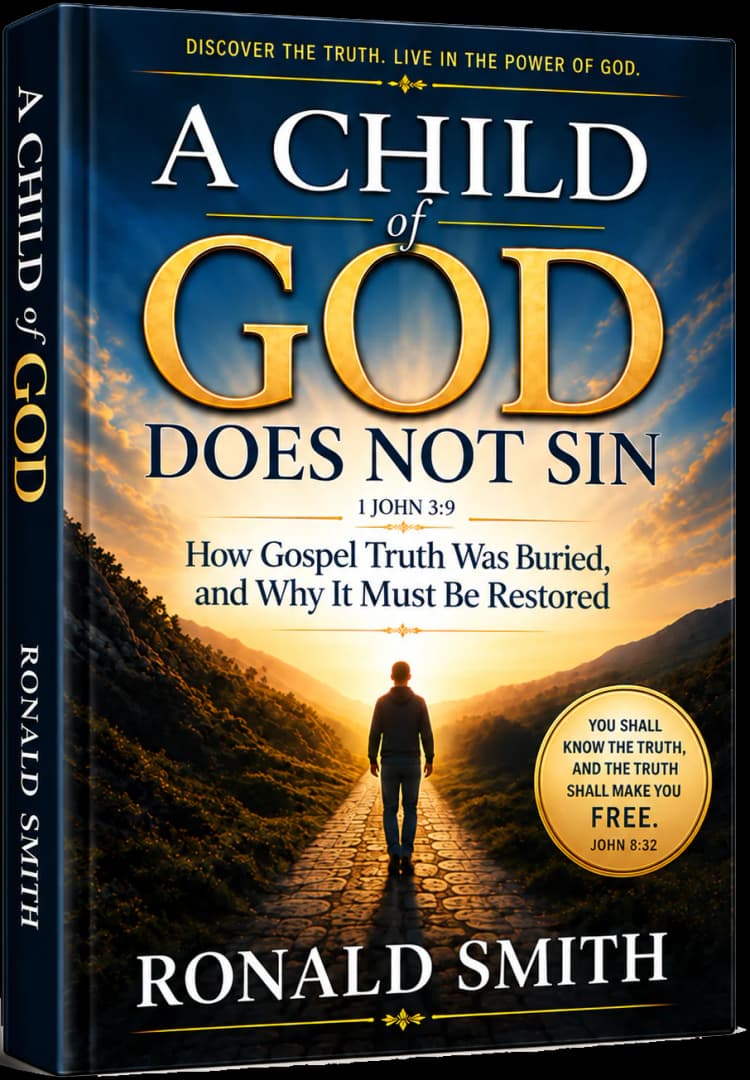
There is another reason I didn’t write this book sooner. Simply put, the issue seemed so obvious to me that I kept waiting for an actual theologian, pastor, or seminary scholar to call it out — and at least it would be off my plate. But the book, the sermon, the movie never came. I have sat through, watched, or read at least 2,000 to 3,000 sermons in the past thirty-three years. Do the math. I have never once heard a sermon preached on 1 John 3:9, the verse this book is based upon, which simply says:
“Whoever has been born of God does not sin, for His seed remains in him; and he cannot sin, because he has been born of God.” (NKJV)
It’s not a complicated verse. But, in my opinion, it is easily the most powerful in the entire Bible. It says in plain words what this is all about — the very reason that our Savior rose from the grave and filled us with His incredible power — and yet no one was willing to touch the verse with a ten-foot pole.
The question I couldn’t shake, once I realized how deep the blackout was, was simply: why?
Why is this precious and powerful verse treated like the plague in every church, every small group, every Bible study I have ever been in?
What is even stranger, if that’s possible, is that no one ever preaches against 1 John 3:9 either. It’s not like there is a lobbying effort trying to kill the verse. It is something far worse — total silence. Like maybe if no one talks about it, it will just go away. And guess what: it pretty much worked. When is the last time you heard anyone talk about it?
Hold that number in your mind and compare it to the verses we hear every day. “If we confess our sins, he is faithful to forgive us.” “We’re not under law, we’re under grace.” “If we say we have no sin, we deceive ourselves.” I trust you can see what I’m talking about.
The very verse that glorifies freedom from sin has been buried. And the verses that glorify defeat are exalted.
So I kept having this recurring debate with myself — and it’s not easy living in my head — why is the Bible I read so disconnected from the “Christian” world around me, and why am I the only one who not only notices, but seems to be the only one who cares?
It’s like we’re all playing one big game that just goes on and on with no end in sight. We’ll read or hear the verses about obeying God on Sunday, then the rest of the week we’ll deal with the fallout from seemingly nobody doing that.
Surely, somebody is going to call this nonsense out once and for all, right?
Eventually, I’d just get tired of complaining about it, and I know my wife was really tired of it. So I’d set the issue back on the proverbial shelf again for another year or two and try to ignore the disconnect once again, waiting for somebody or something to come along and fix it.
At some point the silence became deafening, and God’s voice broke through my thick head.
Ron, the person you’re waiting on is you.
Ouch.
It was a book I read from a dear friend of ours — Debra Boblitt, that finally convinced me to pull it all together and finish what I had started. I likely would have been still “thinking about it” for another 33 years if not for her book. I talk about her further in the Acknowledgments section at the end.
The Journalist’s Instinct
My degree is in journalism from Northern Arizona University, with a specialization in public relations. My first job out of college was in the PR department of a large high school district, a job that turned out to be less about communication and more about what I can only call “strategic information management.” The expectation, from senior leadership, was to cover things up. To shape narratives in ways that would protect the institution rather than inform the public. I was not okay with that, and after a period of being asked multiple times to hide or suppress the truth, I resigned. That decision is how I ended up in sales and marketing, which turned out to suit me considerably better.
But the instinct that made me uncomfortable in that PR job never went away. I know what institutional pattern management looks like. And when Dave said “Today, most people in the church don’t believe it” — something in my journalistic wiring fired. A normal reaction would have been to wonder if the doctrine was even true, but my reaction skipped that and went straight to why doesn’t the church believe that anymore, and how in the world did that happen?
Figuring that out became something between a passion and an obsession. The drift was not entirely accidental, I would eventually conclude. There were structural incentives at key points — commercial, institutional, and theological, that consistently rewarded a lower standard and made the harder truth inconvenient. One example is a popular study Bible whose embedded commentary quietly reclassified portions of the New Testament as not applicable to the present church — a story told in full in Chapter 8. The commercial incentives that rewarded softer translations. The institutional momentum of organizations that are easier to grow when grace costs nothing. Not everyone in the system was acting in bad faith — many were simply formed by what they received and passed it along without examining it. But the system was not shaped entirely by innocent drift. Incentives matter, and they shape institutions slowly, without anyone needing to announce it. And once I saw that pattern, I started seeing it almost everywhere I looked.
33 Years — On Again, Off Again
To be clear, the 33 years from that first conversation with Dave in the Sunshine Cafe to today were not 33 years of sustained, focused pursuit. Some guys take up golf, hunting, or whatever as a hobby, but with a houseful of young kids, that wasn’t practical, so getting to the bottom of this became my hobby. First, I read a lot — nearly all of Wesley’s sermons, a lot of Billy Graham’s, two books from Ray Comfort, and dozens of other articles and sermons from other theologians and authors. The Spirit in me connected immediately with the wisdom and insights I learned from Wesley, but I needed confirmation to make sure I wasn’t just misreading something, especially since reading Wesley’s writings can be a bit tedious at times, to say the least. The other theologians all pointed in the same direction as Wesley, which only solidified my belief.
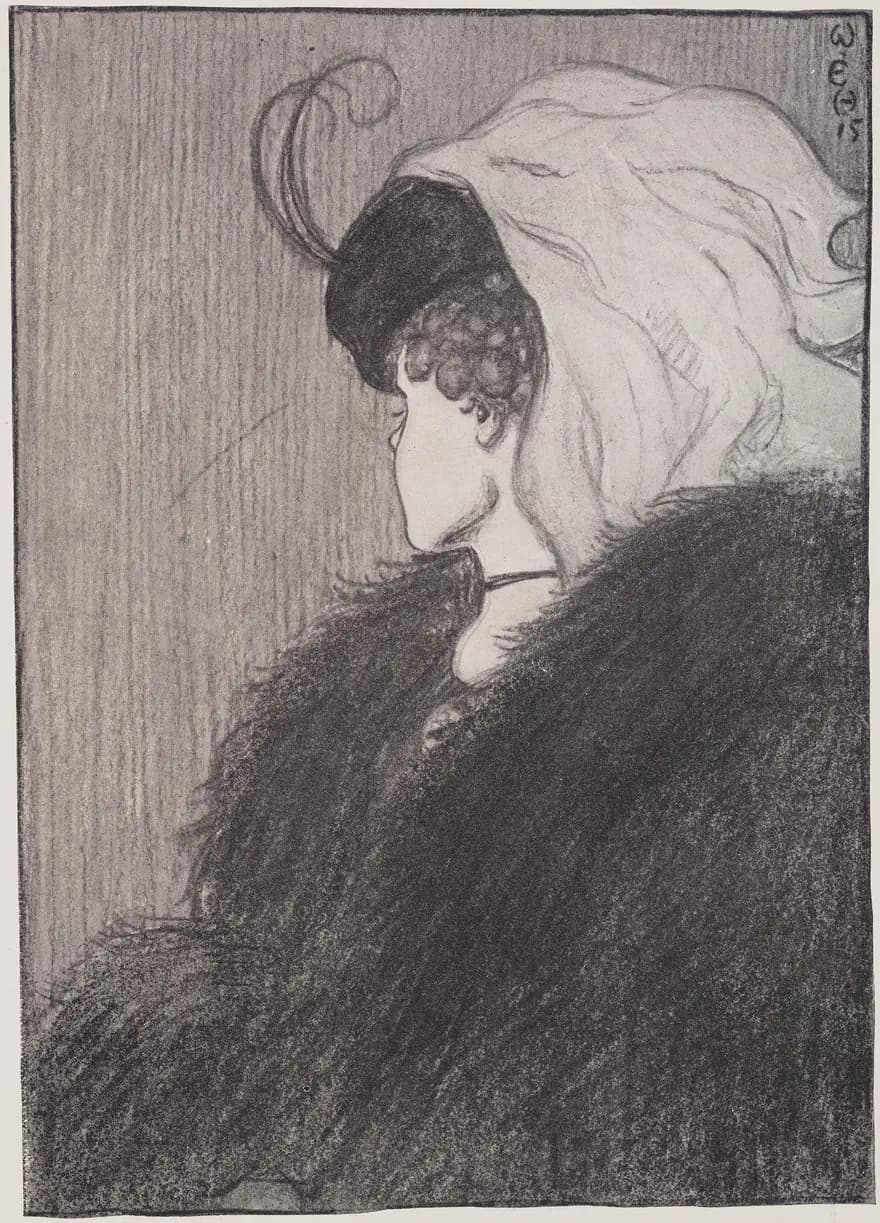
At some point, maybe a year or two into the journey, complete clarity came, and something extraordinary happened: the entire Bible suddenly made sense. Promises I had been reading for years without fully believing became real. It was exhilarating in a way that is difficult to describe — like one of those optical illusions where two images share the exact same lines: for years I only ever saw one of them, and then, all at once, the second one resolved into view. Once you’ve seen both, you can call up either one at will — but you never again believe there was only one picture there.