The same online preacher I've mentioned before — the "gospel of grace" teacher with the large following — is back with another verse, and this one deserves real engagement, because it's genuinely one of the stronger texts for eternal security in general, but falls woefully short of supporting the idea of "free grace" no matter what happens downstream.
The verse, and his case
John 5:24: "Most assuredly, I say to you, he who hears My word and believes in Him who sent Me has everlasting life, and shall not come into judgment, but has passed from death into life." His argument: this is about as plain as Scripture gets. Believe, and you will not come into judgment. Full stop. Not "believe and then maintain it." Not "believe, and then don't walk away from it." Just: believe, and you have already, permanently, crossed over.
Where he's got real grammar on his side
I want to give this one its full due before I push back, because the Greek genuinely supports part of his case. "Has passed from death into life" translates a Greek perfect tense verb — a completed action with a continuing result. That's not a minor detail. The text is describing something real, finished, and settled, not a probationary status under constant review. Anyone arguing this verse is describing an unstable, moment-to-moment condition is reading against the grammar. On that specific point, I think he's right, and I said something almost identical about tetelestai in an earlier post.
The question the verse doesn't answer: believes Him for what?
There's a question underneath this whole discussion that I think matters more than tense, and it's one I keep coming back to throughout this whole series: believing that something is true, and trusting yourself into someone, are not automatically the same act — even when both get called "believing."
Look at the exact wording again: "he who hears My word and believes in Him who sent Me." Believes Him — for what, specifically? That He exists? That He's telling the truth about something? Or the deeper, whole-life entrusting of yourself to Him that saving faith actually requires? John's own Gospel doesn't let "believed" coast on its own; just two chapters earlier, John reports that "many believed in His name when they saw the signs which He did. But Jesus did not commit Himself to them, because He knew all men... for He knew what was in man" (John 2:23-25). People "believed" — the same verb — and Jesus still didn't trust them with Himself. Whatever they had, it wasn't yet the real thing.
That's the same distinction behind James 2:19: even demons "believe — and shudder." Belief that something is true, held at arm's length, isn't nothing — but it isn't saving faith either. So "he who hears My word and believes in Him" is quietly assuming an answer to a question the verse itself doesn't settle: which kind of believing is this? The security this verse promises is real, and it's for the kind of believing John spends his whole Gospel describing elsewhere — the whole-trust kind, not the arm's-length kind. Assuming every instance of "believed" in Scripture automatically means the deepest kind is exactly the move that needs defending, not assuming.
There's also a grammar point going the same direction
Go back to the sentence's grammar for a second, because there's a piece the tense argument above doesn't fully capture on its own: "he who hears... and believes" isn't past tense either. In the Greek, both verbs are present active participles — "the one hearing" and "the one believing," describing an ongoing, current state, not a decision made once and shelved. The promise in this verse isn't attached to someone who believed at some point in the past and is now coasting on the momentum. It's attached to someone presently, continuously trusting.
Put the two halves together and you get something more precise than "believe once, you're permanently exempt from judgment no matter what follows." You get: the person who is currently trusting has, as a settled fact, already crossed from death to life. The settled fact and the ongoing trust aren't in competition — the verse needs both halves to say what it says. This is the same pattern behind "to us who are being saved" (1 Corinthians 1:18) — a real, once-for-all reality, lived out in an ongoing present tense. Salvation as a verb as well as a noun, not one instead of the other.
What this verse is actually promising
It's one of the better verses for eternal security as a real, legitimate doctrine, and I take that doctrine seriously even where I land differently on it than he does. But "the currently-trusting believer does not come into judgment" and "a person who believed once and then walked away permanently remains exempt from judgment regardless" are two different claims, and only the first one is actually in the text. The verse promises real, settled security to real, ongoing faith. It was never describing an insurance policy that survives its own cancellation.
To be clear about what "ongoing faith" means here: this isn't a claim about moral perfection, and "currently trusting" isn't a demand that a believer never stumbles again. Mistakes, ignorance, temptation, and ordinary human infirmity aren't what's in view. What actually cancels the policy is the willful, deliberate kind of walking away — not the ordinary unsteadiness of an honest Christian life.
This actually fits the book's own definition of Twisted Scripture: the words never change, but people twist their understanding of them to fit a theology they already hold. That's exactly what's happening here — the words haven't moved an inch, but readers have twisted "real security for someone actually, presently trusting" into "a permanent status immune to whatever follows." It just wasn't in the original list — not because it doesn't qualify, but because it wasn't a widely-discussed verse in this debate when I wrote that chapter. It's getting more attention lately in free grace and "once saved, always saved" circles specifically, so consider this post the update. My book already documents over thirty cases of twisted and altered scriptures on a range of topics: some in Chapter Eight ("Clearing the Blur from 'Twisted' Scripture"), more in Chapter Nine ("How 'Altered' Scripture Has Decimated the Power of God") — and even that list isn't exhaustive. As I say in the book itself, it would run 800 pages if I covered every example that qualifies; what's there is the greatest hits, not the complete catalog.
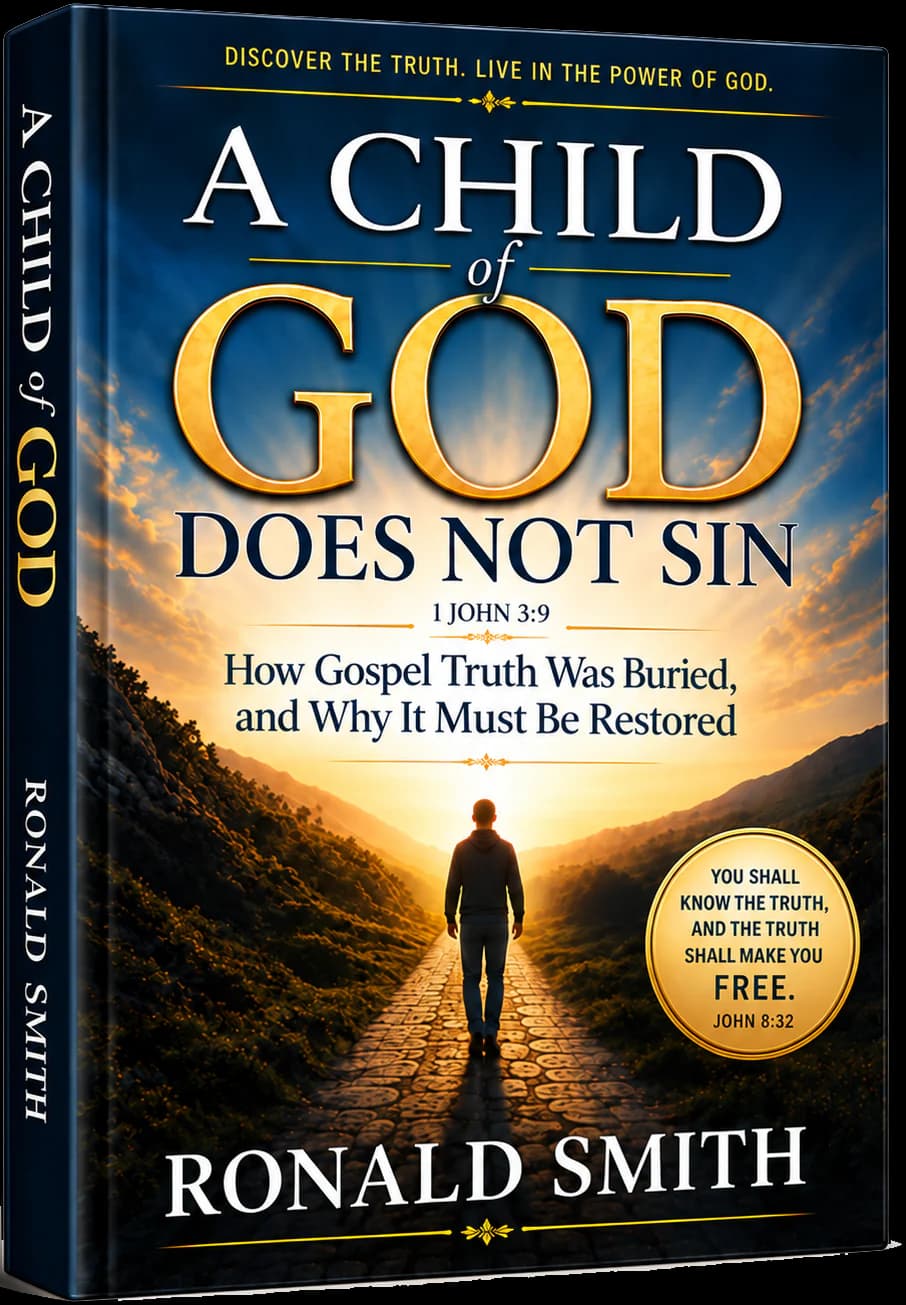
I explore this same "passed from death to life" language at length in Chapter Ten of my book — the parallel version of it shows up in 1 John 3:14, tied to the same question of what genuine, ongoing trust actually produces in a life. A Child of God Does Not Sin releases on Amazon October 1, 2026.