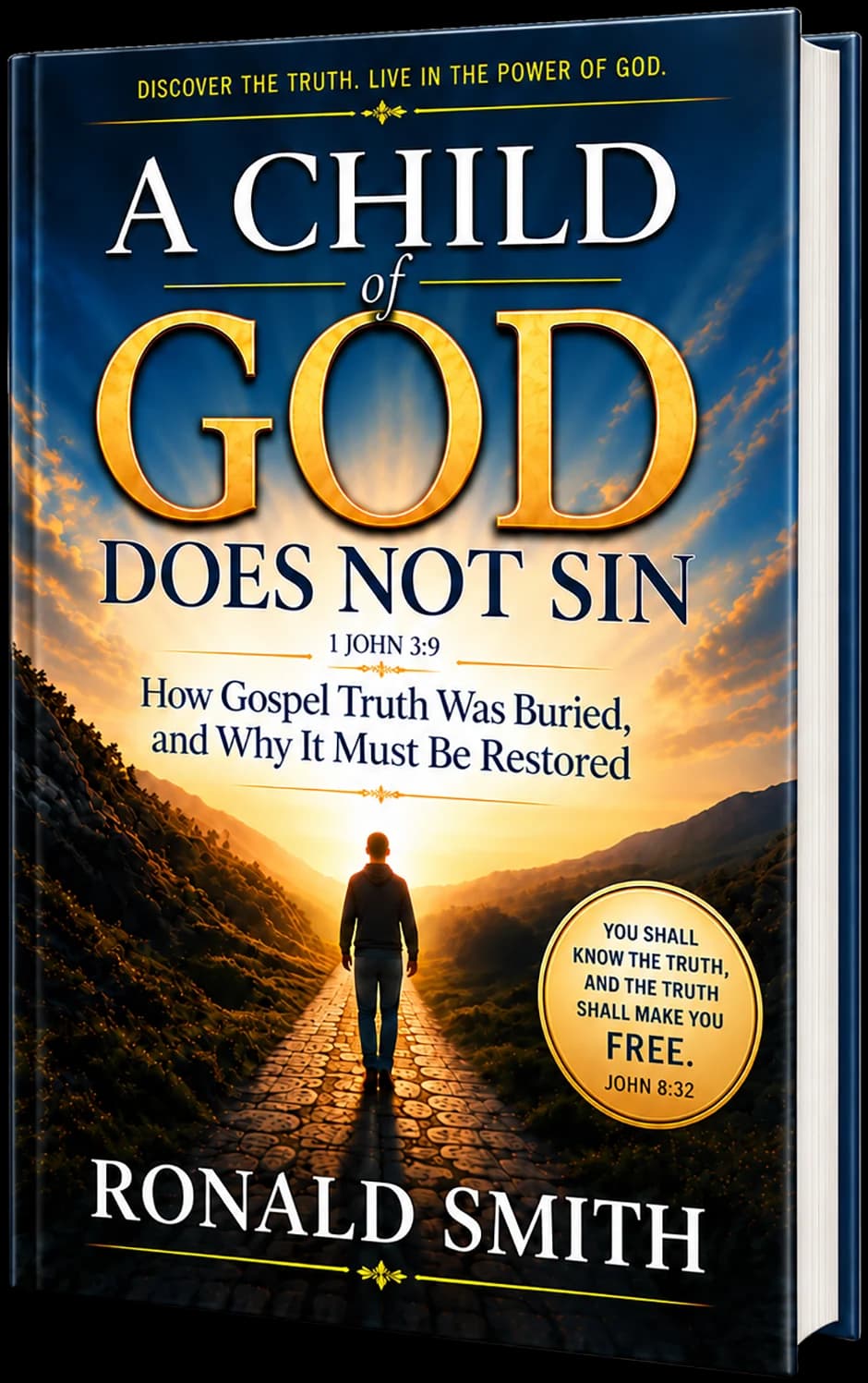

Here's a sentence you may have heard lately: "We're married in our hearts. A piece of paper from the state doesn't make it real." People usually say it warmly, and often sincerely. It's spreading fast.
My book, A Child of God Does Not Sin, describes two ways people talk themselves out of obeying God. I call them traps. Trap One is believing that what you're doing isn't actually sin. Trap Two is believing there won't be real consequences. "Married in our hearts" is a clear example of Trap One, and it often leans on Trap Two as well. This post looks at why the idea is so popular and what the Bible says about it.
How common is this?
Start with the numbers. A well-known 2007 study by Lawrence Finer found that about 95% of Americans have had sex outside of marriage by age 44. Later researchers reran the same data a different way and found lower figures for younger people, and my book's footnote says so. Even so, nobody finds it rare. Pew Research found in 2019 that among adults 18 to 44, more have lived with a partner (59%) than have ever been married (50%).
When almost everyone is doing something, people tend to react in one of two ways. Some feel guilty. Others decide it must not be that wrong after all. That second reaction is where the two traps live.
Trap One: "I don't believe this is actually sin"
Trap One is the belief that what you're doing isn't sin. "Married in my heart" is a clever version of it, because it doesn't argue with the commandment. It agrees that sex belongs in marriage, then changes what counts as marriage. Nobody says, "Fornication is fine." They say, "This isn't fornication. We're married. Spiritually."
That sounds like a loophole. It deserves a real answer, not an eye-roll, so here are five.
- Jesus used the "spirit of the law" to raise the bar, not lower it. "You have heard that it was said to those of old, 'You shall not commit adultery.' But I say to you that whoever looks at a woman to lust for her has already committed adultery with her in his heart" (Matthew 5:27-28). The spirit of the law asked more than the letter. Nobody in the Sermon on the Mount says, "Technically you only broke the rule in your heart, so you're fine." Wesley preached on that very sermon and said a Christian's righteousness goes beyond the Pharisees' "by fulfilling the spirit as well as the letter of the law; by inward as well as outward obedience" (Sermon 25). Spirit and letter, not spirit instead of letter.
- Jesus drew a line with the woman at the well. "You have well said, 'I have no husband,' for you have had five husbands, and the one whom you now have is not your husband; in that you spoke truly" (John 4:17-18). She was living with a man. Jesus did not say, "Close enough, if you feel committed." He said, "is not your husband."
- Biblical marriage was never invisible. Genesis 2:24 says a man "shall leave his father and mother and be joined to his wife." Leaving is something other people can see. In Ruth 4, Boaz stands at the city gate before the elders and says, "You are witnesses this day... Moreover, Ruth the Moabitess... I have acquired as my wife." And Malachi 2:14 calls a wife "your companion and your wife by covenant," with the Lord himself as witness. Covenants have words, witnesses, and consequences for breaking them. "In my heart" has none of the three.
- Does the Bible require a state license? No. It requires a public covenant, and in most places the license is how that covenant becomes public. For centuries, marriage in the church was made by consent spoken aloud, "I take you," not by a private feeling, and the church worked hard to stop the secret kind. In Wesley's day, Parliament passed a Marriage Act (1753) aimed at "clandestine" marriages, the quiet kind with no public announcement, no official record, and no way for anyone else to know who was actually married. The paperwork isn't what makes a marriage holy. It's what keeps a vow from being deniable.
- The test is easy. If the commitment is real, the cost of making it public is a form, a modest fee, and an afternoon. When someone insists the marriage is fully real but resists making it official, the resistance is telling you something. Usually it's that the exit door is staying unlocked, and an exit door is the opposite of a covenant.
Put it in terms everyone gets: "Officer, I drive in the spirit of the law, so I don't need a license" has never once worked at a traffic stop.
John Wesley saw this pattern too. In his note on 1 Corinthians 6:9, he warned that "we are never secure from the greatest sins, till we guard against those which are thought the least." In plain English, the sins we think are small are the ones we stop guarding against.
A word about knowing
John Wesley defined sin as a willful break of a law you know about. So what about someone who has talked themselves into believing it isn't sin? Do they get a pass? Not really. Not knowing is one thing. Talking yourself out of what you already knew is another, and that is what 1 Corinthians 6:9 warns about: "Do not be deceived." A loophole you built yourself doesn't cover you.
Paul says something similar in Athens: "Truly, these times of ignorance God overlooked, but now commands all men everywhere to repent" (Acts 17:30). Ignorance gets real mercy, and so does someone hearing the command for the first time. But once the command is known, God's message changes from "I overlooked it" to "repent." The good news is that nobody has to stay where they are.
"But Getting Married Will Cost Us"
The most sympathetic version of the loophole is financial. A widowed couple on a fixed income could lose benefits by remarrying. A college student could lose aid or a parent's insurance. These are real numbers, and for a widow on a fixed income the pressure is not small. I'm not saying this is easy. But the standard is marriage, and a price tag doesn't change a standard.
What about Romans 13? Paul writes, "Let every soul be subject to the governing authorities... Therefore you must be subject, not only because of wrath but also for conscience' sake" (Romans 13:1, 5). No law forces anyone to marry, so skipping a license isn't breaking a law. But marriage is one of the structures a community uses to make a covenant public and accountable, and Scripture tells us to honor such structures. There is one limit: "We ought to obey God rather than men" (Acts 5:29), which applies when a government commands something God forbids. A marriage license doesn't require anything God forbids. So skipping it to protect a benefit isn't standing on conscience. It's avoiding a cost, and "married in our hearts" becomes the cover story.
If a benefits rule penalizes marriage, that is a problem for voters and lawmakers to fix. It doesn't change what God's Word says. My book argues for zero tolerance toward willful sin, because once we start writing exceptions based on price, the standard is no longer a standard. John Wesley said it plainly in that same sermon: "no allowance is made for one darling lust; no reserve for one idol." Nobody gets a discount on the seventh commandment.
That sounds harsh until you remember who is making the promises. "Look at the birds of the air, for they neither sow nor reap nor gather into barns; yet your heavenly Father feeds them. Are you not of more value than they?" (Matthew 6:26). "But seek first the kingdom of God and His righteousness, and all these things shall be added to you" (Matthew 6:33). "And my God shall supply all your need according to His riches in glory by Christ Jesus" (Philippians 4:19). Those promises cover needs, not luxuries, and they are made to people who obey first. A couple who asks God to cover the lost income is trusting Him with the whole thing, which a private "heart marriage" never does.
College students: the same answer applies. You can wait, or you can marry. Both are honorable. "Married in our hearts" is neither.
Trap Two: "I don't believe the consequences are real"
Trap Two is believing there's no real cost. Trap One says it isn't wrong. Trap Two says even if it is, nothing's going to happen.
The Bible is blunt about this. "Do not be deceived, God is not mocked; for whatever a man sows, that he will also reap" (Galatians 6:7). "Marriage is honorable among all, and the bed undefiled; but fornicators and adulterers God will judge" (Hebrews 13:4). John Wesley's note on that verse says people who do this "frequently escape the sentence of men." In other words, nobody else noticing doesn't mean nobody is keeping score.
The consequences aren't only spiritual. Here are a few, from my book and from public data:
- Couples who live together break up more often. A 2002 government report found that about half of first live-in relationships (49%) ended within five years, compared with 20% of first marriages. Newer government data found about one-third had ended within five years, and only about half had turned into marriages. Couples who live together aren't identical to couples who marry, so treat this as a rough picture. But the direction is the same in every report I found.
- Children bear the cost. Roughly 4 in 10 births in this country are now outside marriage. About 1 in 4 children lives in a single-parent home, up from about 1 in 12 in 1960.
- The Bible says the body is involved. Paul says the person who commits sexual immorality "sins against his own body" (1 Corinthians 6:18). John Wesley's note on that verse says: "Flee fornication... with speed, with abhorrence, with all your might."
I'm not trying to scare anyone. These numbers answer the question "who is it hurting?" Usually the answer is everyone nearby.
What this isn't
I want to be clear about what I'm not saying. I'm not saying Christians must be morally perfect, and I'm not saying anyone with this in their past is beyond hope. Mistakes, ignorance, temptation, and ordinary human weakness aren't what's in view. What's in view is willful sin: knowing what God commands, building a reason around it, and choosing it anyway. A child of God is freed from that, not just forgiven for it, and that is the promise of 1 John 3:9: "Whoever has been born of God does not sin, for His seed remains in him."
The way back is short
Paul puts fornicators in the same list as thieves and drunkards in 1 Corinthians 6, and then he says something I would hang over every one of these conversations: "And such were some of you. But you were washed, but you were sanctified, but you were justified in the name of the Lord Jesus and by the Spirit of our God" (1 Corinthians 6:11). The key word is were. That's past tense. If you're living this way now, the way out is simple to say, even if it's hard to do. Either make it a real marriage, in front of witnesses, with the vows spoken out loud, or end the arrangement and live clean. Both are decisions, and decisions are exactly what God's grace gives you the power to make.
I cover all three traps, and how to get out of them, in my book. A Child of God Does Not Sin is now available on Amazon.