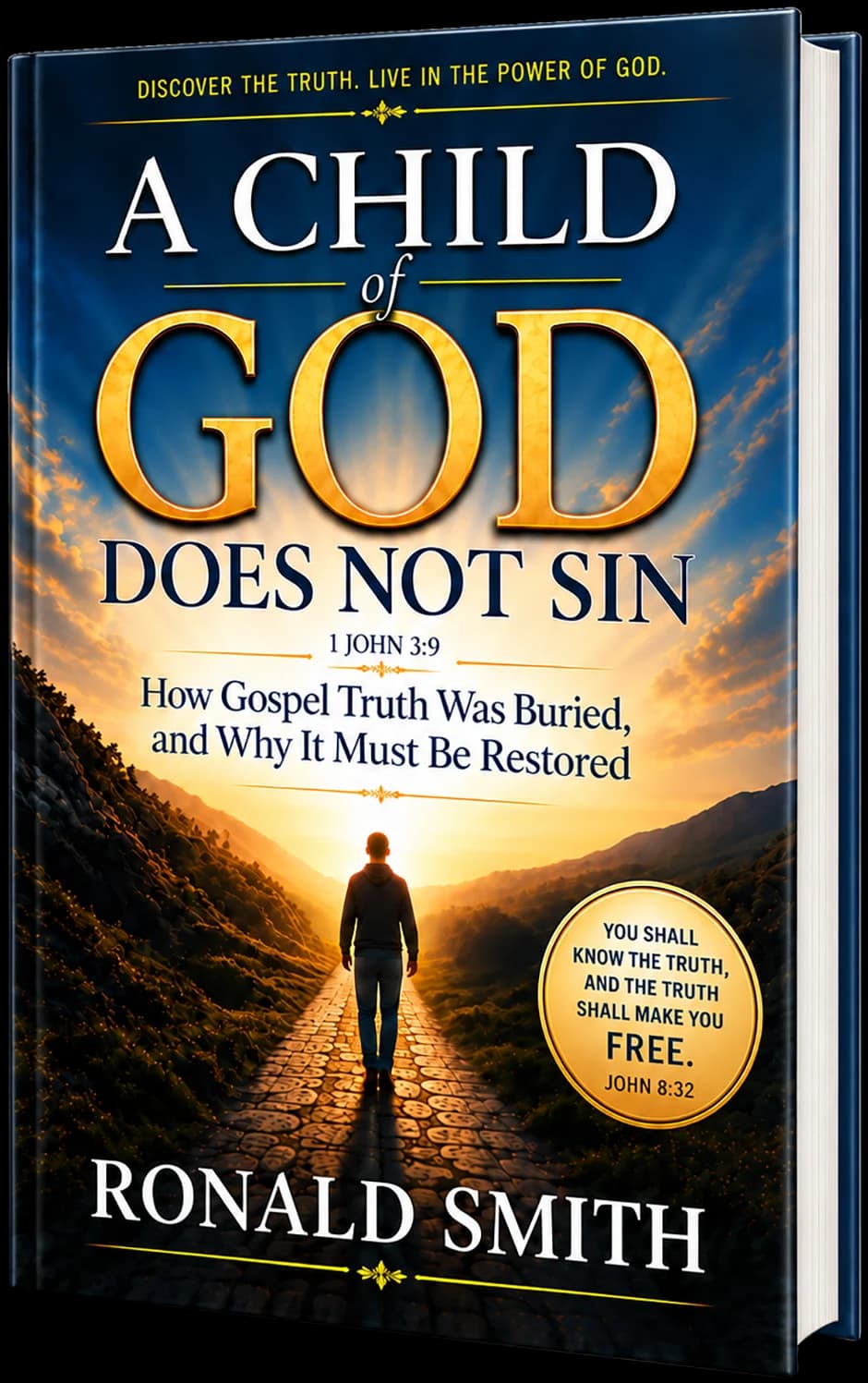

I've written about repentance and confession as two separate posts on this blog — part of the same research behind my book, A Child of God Does Not Sin — and a reader recently asked me the obvious question I'd somehow skipped: how do those two actually fit together? Turns out there's a real answer, and it was hiding in both posts the whole time.
The same wrong turn, corrected twice
Both words get flattened into the same mistake, and I corrected it the same way twice without quite naming that I was doing it. People hear "repent" and picture manufactured tears. People hear "confess" and picture a tearful booth-confession. Both pictures are wrong for the identical reason: metanoia (repentance) means a change of mind, not a feeling, and homologeō (confession) means agreement, not a feeling. Both posts land on the same verse to prove it — 2 Corinthians 7:10, "godly sorrow produces repentance." Sorrow is the producer. It isn't the thing itself. Run that same logic on confession and you get the same result: sorrow may show up alongside honest confession, but it isn't what confession actually is.
That's not a coincidence. It's the same error, showing up twice, because both words got swallowed by the same cultural habit of turning obedience into an emotional performance.
Where they actually differ
Here's the distinction that matters, and it's about direction, not feeling. Repentance is a turn. Acts 20:21 describes Paul's preaching as "repentance toward God, and faith toward our Lord Jesus Christ" — one whole-self reorientation, away from sin, toward God. It's general. It's about which way you're facing.
Confession is narrower. The word itself — homos ("same") plus legō ("to say") — means saying the same thing God says, about one specific thing. Not a turn. A verdict, matched to His verdict, on a particular sin. Repentance asks which direction you're oriented. Confession asks whether you're willing to call this one thing, right here, exactly what He already calls it.
How the two actually connect
Confession is what repentance looks like up close, applied to one instance at a time. None of this is something a person manufactures by sheer willpower, either — the turn itself is the Spirit's own work in a person (John 16:8, Romans 2:4), not a self-generated resolution. What follows describes the shape that Spirit-produced turn takes, not its source. You can't genuinely agree with God that something is sin while your mind is still oriented against that verdict — that's not confession, that's just more accurate paperwork. James makes this exact point with the demons: they "believe — and shudder" (James 2:19). Correct information, zero turn behind it, and it saves nobody. Agreement without repentance is just a sharper description of the same unmoved position.
So repentance is the standing orientation. Confession is the specific, repeatable practice a genuinely repentant mind keeps producing as each new instance surfaces — the honest mistakes and blind spots 1 John 1:9 has in view, not willful sin recurring on a schedule. A genuine fall is a different situation entirely, one the book addresses directly in its own chapter on restoration, not a normal feature of this rhythm. You don't repent once and confess forever on autopilot, and you don't confess your way into repentance one admission at a time. The turn comes first — logically, if not always in perceptible sequence — the same Spirit-wrought movement of the heart producing both, almost as one motion. Confession is what a person already facing the right direction says when they notice they've drifted.
Put the two together and you get 1 John 1:9's whole logic in one sentence: a person oriented toward God (repentance) keeps naming what's actually true about specific sin, out loud, without negotiating it down (confession) — "and He is faithful and just to forgive us our sins and cleanse us from all unrighteousness." Neither word does the other's job. Both are required, and in that order.
Worth being precise about what this is and isn't describing: this is the ongoing rhythm of a believer already walking in the light (1 John 1:7), not the mechanism of initial salvation. Nobody earns their way into new birth through a correctly ordered sequence of repenting and confessing — that's by grace through faith, full stop. This is what living inside that gift looks like afterward, day by day.
If something specific surfaced while you read this — a direction you know you haven't turned from, or a sin you've been describing as anything but what it is — that's not a coincidence. That's exactly the moment both of these words were written for. Turn, and then say so.
I go into repentance and belief as two distinct turns in Chapter Three of my book, and confession — Trap One, and what it costs to keep calling sin something else — in Chapter Two and again in Chapter Eight. A Child of God Does Not Sin releases on Amazon October 1, 2026.