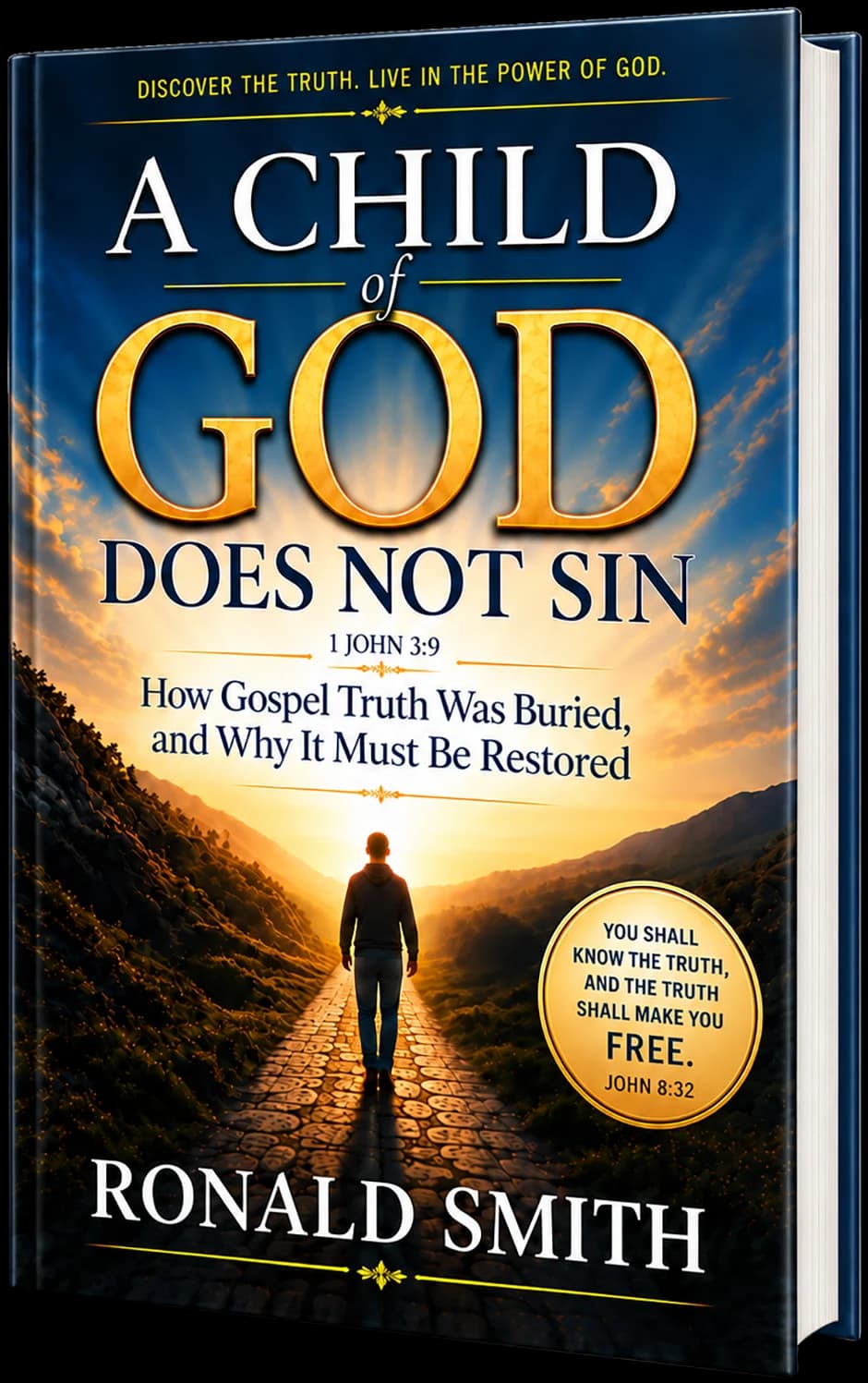

No — and the reason is more interesting than a simple denial. The theologian whose doctrine this book draws on, John Wesley, already rejected that exact phrase, by name, for the same reason I'd reject it now.
The phrase Wesley refused to use
In 1759, writing on the doctrine that would come to define his ministry, Wesley put it plainly: "Therefore 'sinless perfection' is a phrase I never use, lest I should seem to contradict myself. I believe a person filled with the love of God is still liable to these involuntary transgressions." He wasn't hedging. He was drawing a line he considered essential — a person can be entirely surrendered to God, walking in complete victory over willful sin, and still make an honest mistake, misjudge a situation, or be caught off guard by a temptation they never consented to. None of that, in Wesley's framework, counts as sin "properly so called." "Sinless perfection" erased that distinction. So he refused the phrase.
Why "perfection" alone was already a loaded word
Wesley didn't get to pick a clean, unclaimed term either. By the time he started preaching, "perfection" already meant something specific to most ears: flawless, absolute, without error of any kind — the very thing the Reformers had already declared impossible this side of heaven, and rightly so, if that's what the word meant. Wesley wasn't arguing with the Reformers on that point. He agreed with them. What he added was one word: Christian. Not perfection in the sense the culture assumed, but teleios — the New Testament's own word for it, meaning maturity, completeness, a fully formed love, not flawlessness. The qualifier existed to correct a misreading before it could even start.
What actually falls outside "sin, properly so called"
Wesley was specific about this, not vague. In his landmark Sermon 40, he named four categories that don't count: honest mistakes made in good faith, actions taken in real ignorance of what God required, temptations the will never consented to, and the ordinary infirmities of a body and mind still touched by the fall. A wrong turn taken while genuinely trying to follow God is not the same thing, in this framework, as a known road deliberately avoided. That distinction is the entire hinge. Sin, properly so called, is a willful transgression of a known law of God — the deliberate, conscious choice to do what you already know is wrong. Everything on Wesley's list of four falls outside that definition, by design.
One honest scope note: Wesley's full doctrine of Christian Perfection reaches further than this — a positive claim about a heart wholly filled with love, not merely a believer who avoids willful acts. This post, like the book itself, focuses on the foundational piece: freedom from willful sin. That's the floor the whole doctrine stands on, not the entire building.
A cautionary contrast: George Whitefield
Wesley's own close friend and fellow revivalist, George Whitefield, is the cautionary tale here. Whitefield — one of the most electrifying preachers of the Great Awakening — confessed "with grief and humble shame... I have fallen into sin often," and called this "the universal experience and acknowledgment... among the godly in every age." He described the Christian life as still marked by "indwelling sin" in "every one of our duties." To be fair to Whitefield, this wasn't carelessness — it's a real, defensible reading serious Reformed theologians still hold today, grounded in Romans 7:14-25 and 1 John 1:8. But it does collapse a distinction Wesley worked to keep separate. Wesley never claimed willful sin was the universal experience of the godly — only that involuntary transgressions were. Same movement, same era, same friendship, and still two very different pictures of what "victory over sin" actually promises.
So what does the book's title actually claim?
Not sinless perfection, in the sense Wesley refused. The title is a direct paraphrase of 1 John 3:9: "Whoever has been born of God does not sin." That's a real, strong claim — but it's a claim about willful sin, the deliberate, knowing choice to disobey. It says nothing about honest mistakes, unintentional lapses, or the ordinary infirmities Wesley listed three hundred years ago. If anything, being this precise about the claim makes it a harder standard to meet than "sinless perfection" usually implies, not an easier one — because it isn't a question of flawlessness. It's a question of willingness. And that's the better news, not the worse news: willingness is something grace can change today, not something you spend a lifetime polishing toward flawless.
To be fair about what this does and doesn't settle: clearing up the phrase "sinless perfection" isn't the same as winning the deeper argument over whether complete, sustained freedom from willful sin is actually attainable before glorification. Serious, godly readers will still disagree with that claim on its merits, not just its wording — Romans 7 and 1 John 1:8 are the texts they'll reach for, and that's a real disagreement this post isn't pretending to resolve. What it does settle is narrower: whatever you think of the claim itself, it was never the claim Wesley's critics accused it of being.
A Child of God Does Not Sin releases on Amazon October 1, 2026.