A reel came across my feed the other day making a claim I hadn't heard laid out quite this clearly before: the word "church" isn't really a translation of the Greek word behind it at all. The Greek word Jesus actually used, ekklesia, meant something closer to a governing assembly of people. The English word we ended up with means something else entirely — a building.
This isn't a new problem — it's the same one again
By now I've written about a preacher collapsing repentance into belief, another one stretching "free grace" further than the grammar allows, and the actual Greek behind the word "confess." Each time, the pattern underneath was identical: a word gets flattened somewhere between the original text and the version sitting in someone's lap on a Sunday morning, and nobody notices, because nobody goes looking.
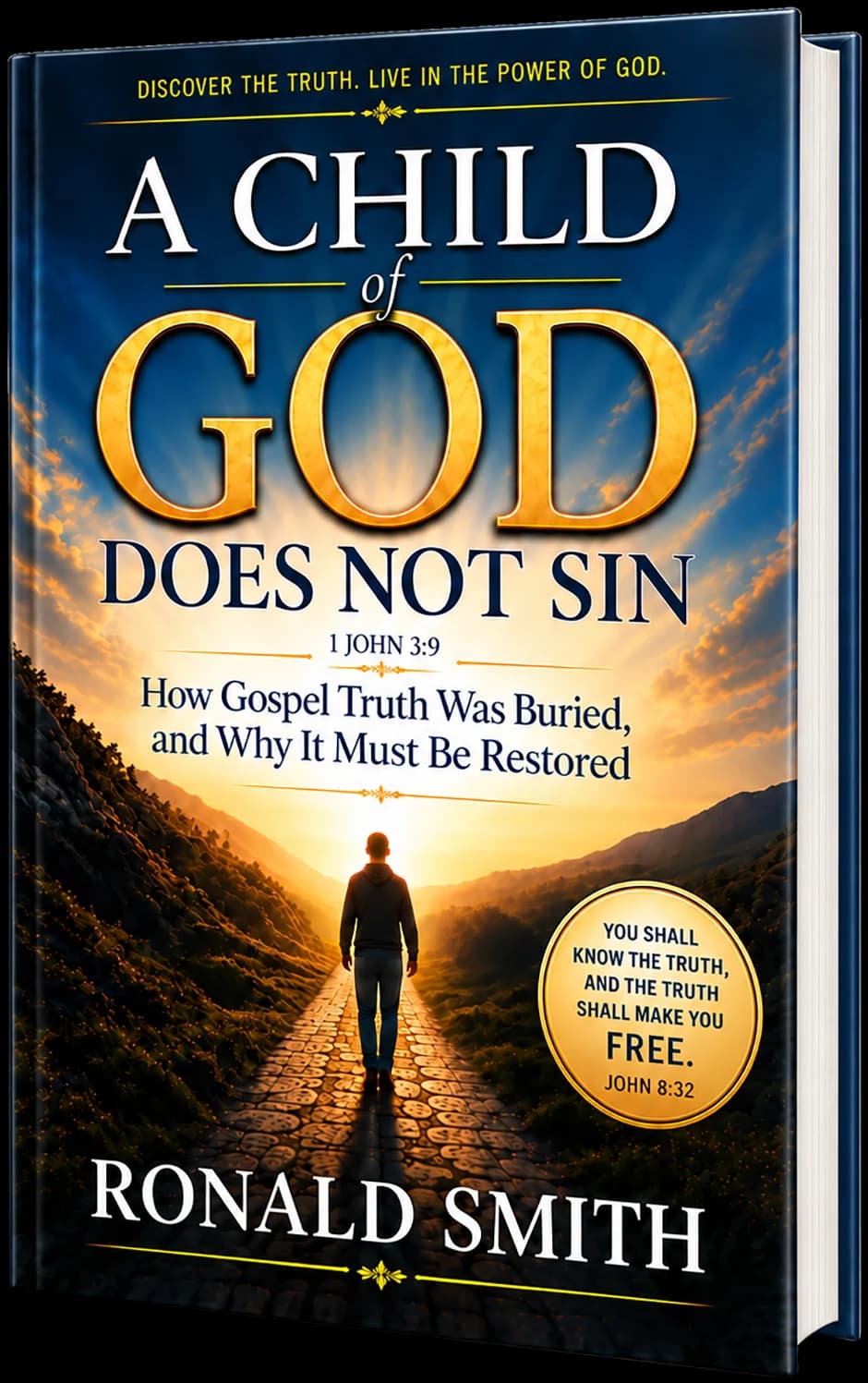
My book, A Child of God Does Not Sin, documents more than thirty of these cases directly, split into two categories: Twisted Scripture, where the words stay exactly the same but the common understanding of them drifts, and Altered Scripture, where the words themselves change through translation and the meaning shifts right along with them. This post belongs to the second category, and it's a more common example than anything on the book's original list — not one verse this time, but the single word most Christians use every week to describe what they belong to.
The word, and what it actually says
Ekklesia (ἐκκλησία) comes from ek ("out of") plus kaleō ("to call") — the called-out ones. Before the New Testament ever touched it, this was a technical, secular, political term. In Athenian democracy, the ekklesia was the sovereign assembly of citizens who gathered to vote on laws, decide policy, and exercise the actual governing authority of the city. It wasn't a religious word borrowed for church use. It was a civic word, deliberately chosen.
That choice was deliberate on the New Testament writers' part too. Koine Greek had plenty of existing religious vocabulary available — words like hieron ("temple") or temenos ("sacred precinct") were sitting right there. The writers skipped past all of it and reached for the political word instead: an assembly of people who together hold real, functioning authority. A governing body.
Where the English word actually comes from
Here's the part that makes this worth a whole post: "church" isn't descended from ekklesia at all. It comes from a completely different Greek phrase, kyriakon dōma — "the Lord's house." That phrase worked its way into the Germanic languages as kirika, and eventually became "church" in English, Kirche in German, kerk in Dutch. From the start, it was a building-word.
Not every Western language went this route. French église, Spanish iglesia, Italian chiesa, Portuguese igreja — all of these descend directly from ecclesia, the Latin transliteration of the actual Greek word Jesus used. It's specifically the English and Germanic branch of the church that inherited the building-word. Even the Catholic Church's own formal Latin name is Ecclesia Catholica — the assembly-word, not the building-word.
None of this makes a physical building illegitimate, to be clear. Gathering somewhere is good and necessary, and nobody's arguing otherwise. The issue was never the building. It's what the word quietly trained everyone to picture first, before any actual argument about buildings ever entered the conversation.
The same word, every time
It's worth being precise here, because this isn't a case where some passages mean the building and others mean the people. It's ekklesia, with no exception, everywhere the word "church" appears in the Greek text. "Kirika" doesn't show up anywhere in the New Testament — it doesn't exist yet. It's centuries away from being coined.
Take the three settings that come up most: "the church of God that is at Corinth" (1 Corinthians 1:2) is ekklesia — and historically, it could only have meant the gathered believers, since there was no dedicated Christian building in Corinth to refer to. The earliest congregations met in homes (Romans 16:5, 1 Corinthians 16:19), and that stayed the norm for roughly two centuries. The oldest archaeologically confirmed Christian worship space — a private home in Dura-Europos, Syria, renovated with an enlarged assembly room and a baptistery — dates to around 233–256 AD, and it was still a converted house, not a structure built as a church from the ground up. Actual purpose-built church architecture didn't become possible until Constantine legalized Christianity in 313 AD; his building program in the 320s and 330s produced Old St. Peter's Basilica in Rome. Every use of "church" in the New Testament predates even the Dura-Europos house by more than a century. There was no building-sense of the word available yet when any of it was written.
The seven churches John addresses in Revelation (1:4, 1:11; chapters 2–3) are the seven ekklesiai — each letter diagnosing the spiritual condition of an actual community of people in that city, not the state of a building. And "I will build my ekklesia" (Matthew 16:18) is Jesus promising to build a people, not a property, using construction imagery on purpose while reaching for the people-word anyway.
Stephen, in Acts 7:38, describes Israel in the wilderness — no temple, no building of any kind, decades from anything permanent — as "the ekklesia in the wilderness." An assembly with no building at all was still, in the New Testament's own vocabulary, fully a church. And when Jesus describes church discipline in Matthew 18:17 — "tell it to the ekklesia" — He's describing a gathered body actually exercising authority and making a real decision, not a location you report an incident to.
So what does it actually cost us
When 99% of people hear the word "church," the picture that comes to mind — a building, an address, a place you go — was never what the word originally described. That's not just a historical curiosity. Every time the word does that quiet swap, it moves the center of gravity off the thing God was actually building and onto the property He was never talking about. A people has a mission — it acts, it exercises authority, it either does something or doesn't. A building just sits there and waits for you to show up to it. Preachers have made some version of this point for decades; "the church is not a building, it's the people" is close to a cliché by now. But a cliché doesn't fix the underlying problem, because the word itself keeps re-installing the wrong picture every single week, in every sentence that uses it. You can correct the mental image from the pulpit on Sunday, and by Tuesday the language has quietly put it back, because "church" still defaults to "building" every time anyone reaches for the word. The preacher making that point isn't just fighting a bad habit. He's fighting the dictionary — and the dictionary doesn't take Sundays off.
The word you were never given
The English text simply never handed readers the word "assembly" to begin with. You can't misinterpret a word you were never given. The interpretation was decided before anyone opened their Bible, by whichever translator picked kirika over ecclesia a thousand years ago.
That's the actual reason these word studies keep multiplying instead of running out. It was never really about one clever Greek fact. It's about how much of what we assume the text says was quietly settled by language choices nobody in the pew ever got a vote on.
A Child of God Does Not Sin releases on Amazon October 1, 2026.