A random reel came across my feed the other day dealing with the word "confess." I've always thought the word was a little odd — even more so because of its connection to the Catholic church practice of stepping into a confessional booth to tell a priest everything you did wrong that week, or the Bible verse that says, "confess your sins to one another." The question I had in both cases was basically: what is so important about "confessing" in all of this?
The word, and what it actually says
The Greek behind "confess" in the New Testament is ὁμολογέω (homologeō) — homos ("same") plus legō ("to say"). Literally: to say the same thing. Not to feel something about it. Not to perform contrition in front of anyone. To agree — to say about your sin exactly what God already says about it, instead of arguing with His verdict, minimizing it, or explaining it away.
That's the word behind 1 John 1:9: "If we confess our sins, he is faithful and just to forgive us our sins and to cleanse us from all unrighteousness." Confession here isn't a transaction where enough remorse buys forgiveness. It's agreement — bringing your assessment of your own sin into line with His, instead of running a quieter, more forgiving one of your own.
Agreement, not performance
I made almost this same argument in an earlier post about repentance: metanoia means a change of mind, not a manufactured feeling of sorrow. Confession runs on the identical rail. Judas "felt remorse" over betraying Jesus (Matthew 27:3 — a different word, metamelomai, real regret, real emotion) and it produced nothing but his own death. Paul draws the same distinction in 2 Corinthians 7:10: godly grief produces repentance; the grief itself isn't the repentance. By the same logic, feeling terrible about sin and agreeing with God about sin are two different acts — and only one of them is what these verses are actually asking for.
But doesn't "confess your sins to one another" sound like sorrow?
James 5:16 seems to cut against this: "Confess your sins to one another and pray for one another, that you may be healed." That sounds exactly like the vulnerable, sorrowful moment this word study is trying to rule out.
Look at the actual Greek, though. James doesn't reuse homologeō here — he uses exomologeō, the same root with ek- ("out") attached: to acknowledge fully, to declare openly. Same core meaning, agreement, just done out loud, to another person, instead of privately before God. The discomfort of admitting real sin to a real human being is a cost of exposure, not proof the word itself means "grieve" — the same way admitting a mistake to your boss instead of just to yourself raises the stakes without changing what "admit" means.
Two details confirm it. First, the purpose clause: "so that you may be healed" — restorative, forward-looking, built around prayer and accountability, not an emotional release valve. Second, James clearly had the vocabulary for grief and used it elsewhere in the very same letter: "let your laughter be turned to mourning" (James 4:9, pentheō — an actual mourning word). He reached for a different word entirely when he told believers to confess to one another.
Why the distinction matters
This isn't a minor translation footnote. It's the antidote to what I call Trap One in Chapter Two of my book: you can't confess sin you don't believe is actually sin. Confession was never information transfer — God isn't waiting to learn what you did; He already knew before you opened your mouth. What confession actually communicates is that you know that He knows, and you've stopped running the argument — stopped calling it a mistake, a struggle, a personality quirk, anything other than what He already called it.
The sorrow that sometimes shows up alongside that kind of honesty is a side effect, not the mechanism. It isn't the sorrow that changes anything. It's the agreement — both of you finally saying the same thing about the same sin — that does. And to be clear, none of this is a claim about moral perfection: mistakes, ignorance, temptation, and ordinary human infirmity aren't what's in view. This is about willful, deliberate sin specifically — the kind that confession addresses by refusing to relabel it as anything else.
So what about the involuntary stuff — the mistakes, the blind spots? Those still get confessed too — and not just to file the report and move on. You agree with God that what you did was actually sin, even though you didn't know it at the time. That's not nothing — it still needed atoning for, same as any other sin. What ignorance changes isn't whether it counted; it's what kind of sin it was. Wesley called this category sin "improperly so called" — real, still requiring the blood of Christ, but not yet the willful, defiant kind. The logic is older than Wesley, too — Aquinas worked out essentially the same distinction centuries earlier under "vincible" and "invincible" ignorance, and Catholic moral theology still runs on it: a sin only becomes mortal with full knowledge and deliberate consent (Catechism 1857). Wesley didn't invent the mechanism; he just gave Protestants their own name for it. Once you know, it moves onto the books as sin "properly so called" — willful, deliberate — the moment you keep doing it anyway.
David asks God to clear him "from hidden faults" he can't even see (Psalm 19:12), and the Law required an offering for unintentional sin same as willful sin (Leviticus 4–5). What changes isn't whether it gets confessed, it's the stakes — before you knew, and after. Unconfessed willful sin is what Trap One is built on: calling it something other than sin so you never have to deal with it. An honest mistake was never hiding behind that kind of denial in the first place, but it doesn't get to stay an honest mistake forever, either, once you've been shown.
That agreement can't be inert, either. Demons "believe" God exists too — they even shudder over it (James 2:19) — and it saves nobody, because their agreement never turns into anything. Correctly labeling something sin and walking back into it tomorrow isn't confession; it's just a more accurate description of the problem. Even the Catholic tradition's own definition of contrition gets this right: "sorrow of the soul... together with the resolution not to sin again" (Catechism 1451). Notice which half is doing the actual work. The sorrow is the accompaniment. The resolution — the turning — is the agreement made real.
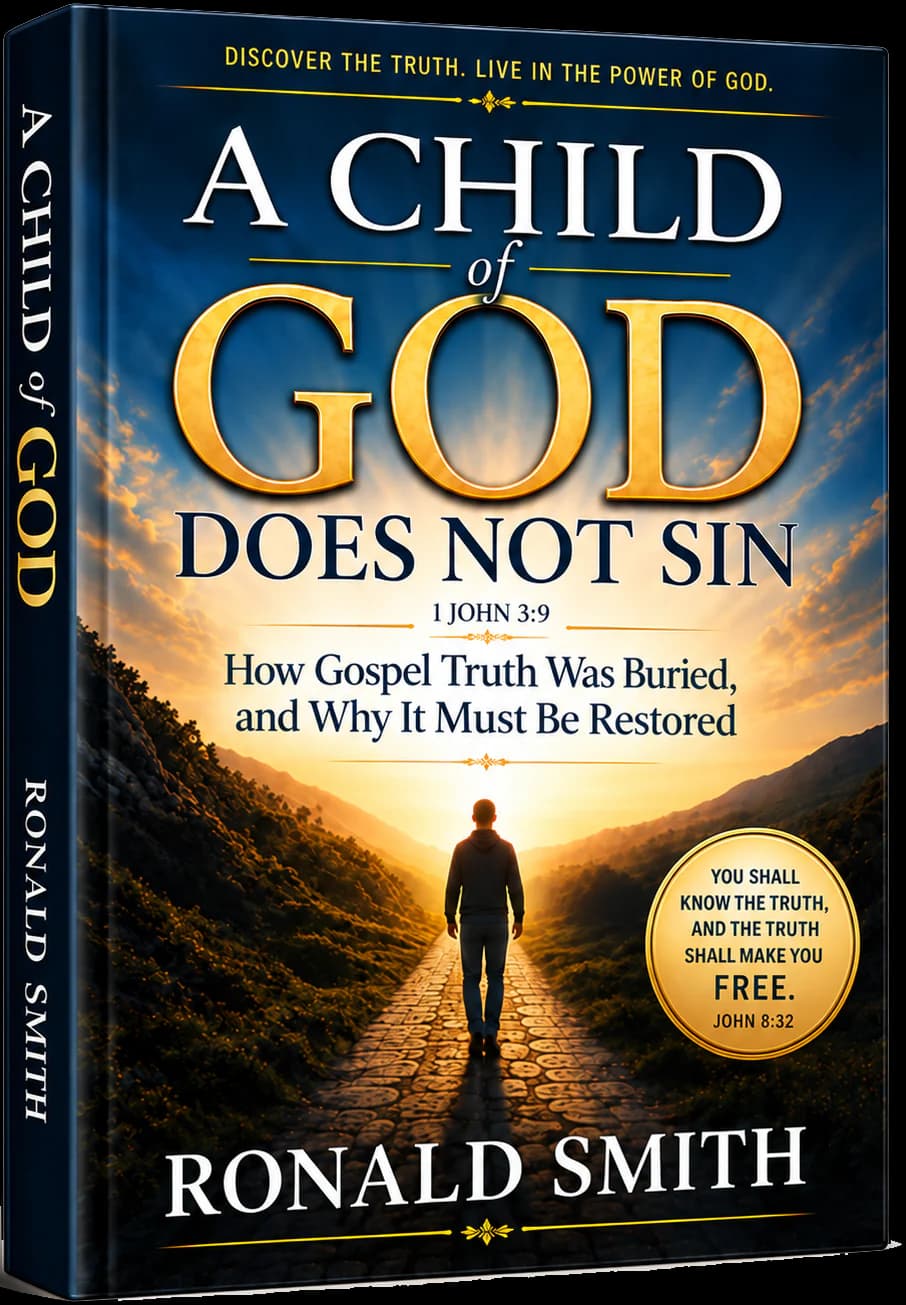
I dig into this same ground in Chapter Eight of my book, in the section on Romans 10:9's "confess with your mouth" — the same Greek root shows up there, and the same point applies: confessing Jesus as Lord was never a phrase to recite, it's agreement with a claim on your life. 1 John 1:8 gets the same treatment a few pages earlier in that chapter. A Child of God Does Not Sin releases on Amazon October 1, 2026.