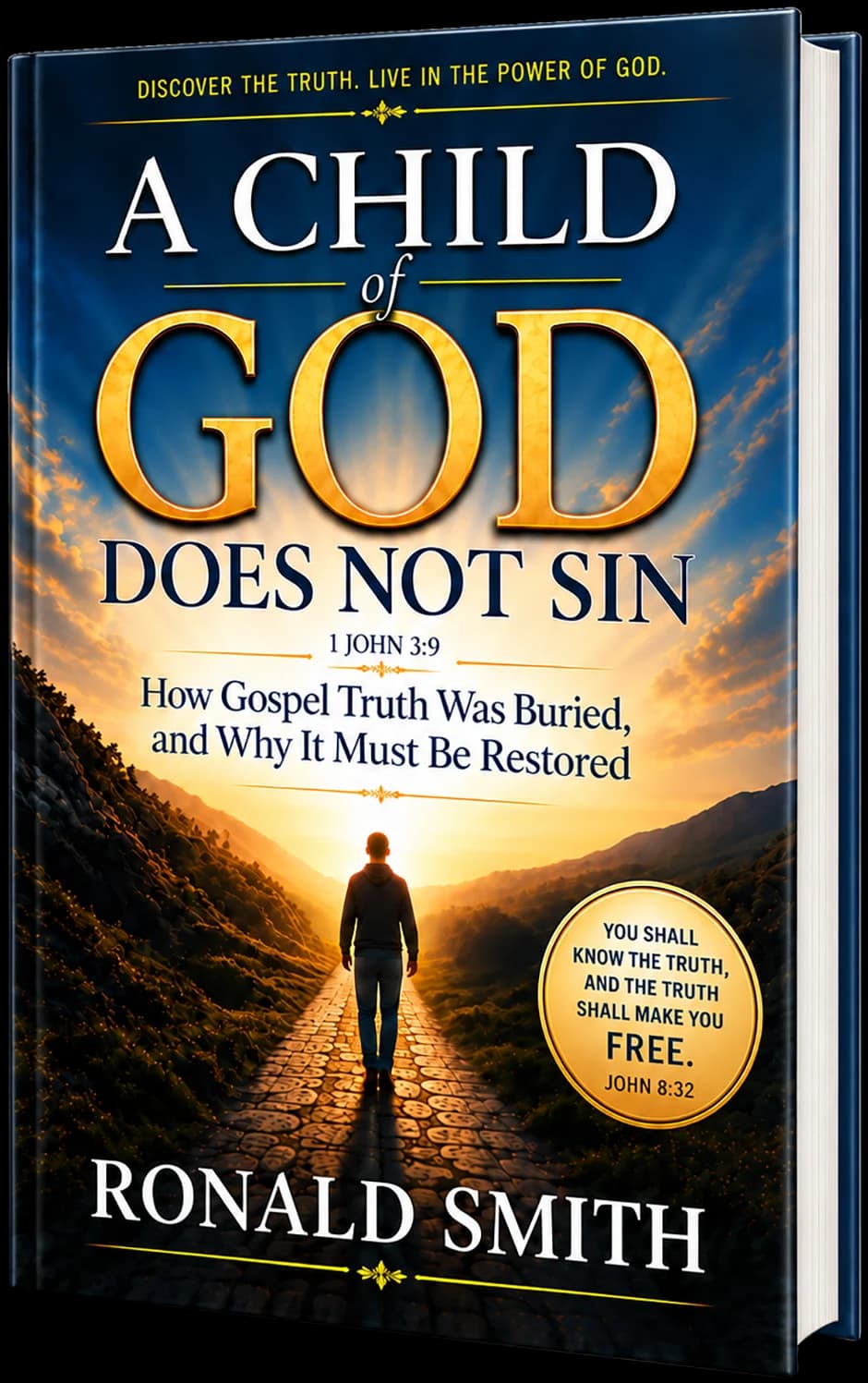

A reel came across my feed making a claim I hear constantly, dressed up as a fresh insight: the Greek word for sin, hamartia, doesn't really mean moral failure — it means "missing the mark," like an archer's arrow falling short of the target. Paul isn't saying we broke a rule in Romans 3:23, the argument goes, he's saying we failed to hit our purpose. "Sin is what happens when a life aimed at God becomes something smaller." It's a nice line. It's also not what the word means, and it matters for my book, A Child of God Does Not Sin, because Chapter One builds its whole definition of sin on getting this exact question right.
The etymology is real. That's not the problem.
Hamartia does have an ancient root connected to "missing" — early Greek used a cognate word for an archer missing a target. That part checks out. The problem is what gets built on top of it: the assumption that a word's meaning today is controlled by what it meant centuries earlier, in a completely different context. Linguists have a name for this mistake, because preachers make it constantly, not just with this word. English does the same thing: "nice" originally meant "foolish" (Latin nescius). Nobody today calls a foolish person nice. By the time Paul was writing, hamartia had been the ordinary, everyday word for sin for hundreds of years. Nobody hearing it in a first-century synagogue was picturing an archer.
The verse that already settles it, sitting in my own first chapter
Here's what actually ends the argument, and it's not a clever rebuttal — it's John, defining his own word. "Sin is lawlessness" (1 John 3:4). In Greek: hamartia estin hē anomia. Sin is lawlessness. That's not me importing a legal framework onto a purpose-driven word from outside the text. That's an inspired author taking the exact word the reel wants to detach from "rule-breaking" and directly equating it, in his own sentence, with the Greek word for lawlessness. Whatever an archer meant by it five hundred years earlier, John tells you flatly what he means by it. I didn't have to go looking for that verse to make this case — it's already the first citation in Chapter One.
What Romans 3:23 is actually the ending of, not the beginning of
The reel treats "fallen short of the glory of God" like Paul is pivoting to a gentler, purpose-based idea. Read what comes right before it. Romans 1:18 through 3:20 is an extended legal case — Gentiles guilty under the law written on their hearts (2:14-15), Jews guilty under the written Law, "every mouth stopped... all the world guilty before God" (3:19), and the verse immediately before 3:23: "by the law is the knowledge of sin" (3:20). Verse 23 is the punchline of that argument, not an escape from it. The archery image isn't Paul's. It's imported to illustrate an etymology his own paragraph doesn't support.
The one thing worth keeping from all this
There's a real insight buried under the bad method, and I don't want to throw it out just because the argument got there the wrong way. Law and purpose were never actually competing categories in Scripture — that's the false choice the reel sets up. God's law was never an arbitrary rulebook bolted onto human life. It's His own description of what a life actually aimed at Him looks like: "the law of the LORD is perfect, converting the soul" (Psalm 19:7). "Missing your purpose" and "transgressing the law" aren't two rival definitions you have to pick between. They're the same thing, described from two directions, because the law is the purpose, written down where you can read it.
Which is really the pattern worth naming. This book spends a lot of time on what I call Twisted and Altered Scripture — verses whose words didn't change but whose meaning drifted, or verses where the actual translated words shifted to soften something. This is a third version of the same instinct, aimed even further upstream: not softening a specific verse, but quietly redefining the word "sin" itself before you ever get to a single verse — trading a known law you can actually examine yourself against for a vaguer, gentler sense of falling short of your potential. It feels better. It's also not what the word means, and not what the author who coined the Bible's own definition of it says.
A Child of God Does Not Sin releases on Amazon October 1, 2026.