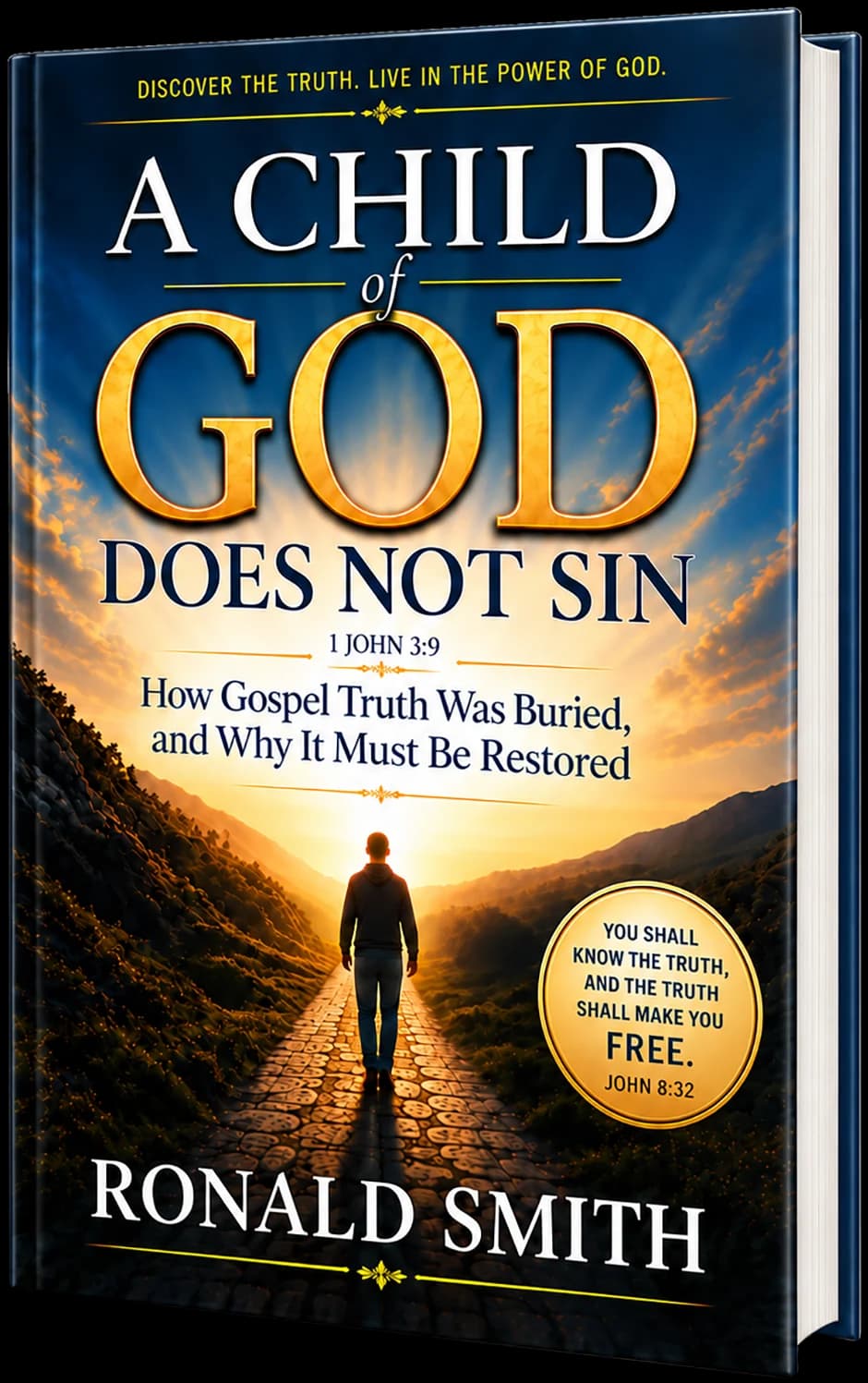
I came across a short reel from Learn From Christ that points out something easy to miss: on the night before the cross, Jesus used the same Greek word for "keep" five times. It fits my book, A Child of God Does Not Sin, and it sheds light on ten statements of Jesus and His apostles that I gather in Chapter Three. By sin I mean what the book means by it, a willful transgression of a known law of God, not mistakes, ignorance or ordinary human weakness.
One word, five times
All five come from the upper room, in John 14 and 15 (NKJV):
- "If you love Me, keep My commandments" (John 14:15).
- "He who has My commandments and keeps them, it is he who loves Me" (John 14:21).
- "If anyone loves Me, he will keep My word; and My Father will love him, and We will come to him and make Our home with him" (John 14:23).
- "He who does not love Me does not keep My words" (John 14:24).
- "If you keep My commandments, you will abide in My love, just as I have kept My Father's commandments and abide in His love" (John 15:10).
The Greek word is tēreō. In these verses it means to obey, plainly and simply. Jesus is not softening the command.
(A few Greek manuscripts have "you will keep" in John 14:15 instead of "keep." The verb is the same either way.)
Love comes first
Notice the order. Jesus does not say, "Keep My commandments, and then I will love you." He says, "If you love Me." Love is the root, and the keeping grows from it. John says the same thing in his letter: "For this is the love of God, that we keep His commandments. And His commandments are not burdensome" (1 John 5:3). Love is not only what you feel about His words. It is what you do with them.
That matches how the book handles obedience. Obedience is not how you earn salvation. As Chapter Three puts it, "You do not obey to become a child of God. You obey because you already are one." But it is not optional either. Jesus and the apostles who carried His words forward state these as real conditions, not suggestions. Love first and obedience required are the same truth read from two ends.
Hear it, then get under it
Hebrews 5:9 says Jesus "became the author of eternal salvation to all who obey Him." The word is hypakouō, built from hypo (under) and akouō (to hear). A word's parts do not settle its meaning, but they give a useful picture: to obey is to hear, and then to place yourself under what you heard.
That picture is the opposite of willful sin. Wesley defined sin in the proper sense as "a voluntary transgression of a known law" (A Plain Account of Christian Perfection). The word that matters is known. Someone who has heard and put himself under the word is obeying it. Someone who has heard and steps over it is not. That is what the book means by willful sin: not stumbling in the dark, but knowing what He said and choosing otherwise.
The room and the home
In John 14:2 Jesus says, "In My Father's house are many mansions." The Greek word is monai, the plural of monē. Twenty-one verses later, in 14:23, He says the Father and He will "make Our home with him." The word for home there is monēn, the same noun. The NKJV renders the two differently, so English readers miss it.
I read that as no accident. The place He went to prepare and the home He makes with the one who keeps His word are named with one word. I am drawing that connection myself, and I hold it loosely. What is plain from the text is where it leads. Keeping His commandments means you "will abide" in His love (John 15:10), and monē comes from menō, to abide. John then writes, "Whoever abides in Him does not sin" (1 John 3:6). Keeping His word, abiding in Him and not sinning willfully are three views of the same life.
Kept, and keeping
In John 17 the same verb turns around. Jesus prays, "Holy Father, keep through Your name those whom You have given Me" (John 17:11), and "I do not pray that You should take them out of the world, but that You should keep them from the evil one" (John 17:15). He tells the disciples to keep His words, and then He asks the Father to keep them.
John carries it into his letter: "We know that whoever is born of God does not sin; but he who has been born of God keeps himself, and the wicked one does not touch him" (1 John 5:18). The NKJV footnote notes that the critical Greek text reads "keeps him," meaning Christ keeping the believer, rather than "keeps himself." The verb is tēreō either way. Obedience here is not you holding on by willpower alone. The same word says He is holding on to you. Throughout the book I argue that Jesus came to keep us from willful sin, not only to forgive us after. This is the word that says it.
Ten verses, one picture
In Chapter Three of my book I gather ten statements from Jesus and His apostles that all say the same thing: John 8:51, John 14:15, John 14:23–24, John 15:8, John 15:10, John 15:14, Hebrews 5:9, 1 John 2:3–4, Revelation 2:10 and 2 Peter 1:10–11. Five of them use tēreō: John 8:51, John 14:15, John 14:23–24, John 15:10 and 1 John 2:3–4. A sixth, Hebrews 5:9, uses hypakouō. More than half of the list is built on two Greek words, one for keeping and one for hearing and yielding.
Read as a to-do list, those ten are crushing, and that is why people soften them or skip them. Read as one picture, they make sense. Someone who loves Him obeys what He said, and He keeps that person. Willful sin is not a missed box on a checklist. It is knowing what He said and choosing otherwise.
Not a loophole
None of this is about mistakes, ignorance or ordinary human weakness. The sin in view is willful sin. John states his purpose plainly: "My little children, these things I write to you, so that you may not sin" (1 John 2:1). The verse goes on, "And if anyone sins, we have an Advocate with the Father, Jesus Christ the righteous." Notice John does not write "when you sin." In my book I read that clause as provision for the inadvertent, acknowledged failure of someone walking in the light, not as a safety net for willful sin (Chapter Eight makes that case in full). What happens when someone does fall into willful sin is a separate question, and Chapter Fifteen takes it up. The goal John sets is that you not commit sin.
So the next time you hear "keep My commandments," don't hear a checklist. Hear a command from the Savior who loves you, and who keeps you from the evil one while you obey.
A Child of God Does Not Sin is now available on Amazon.