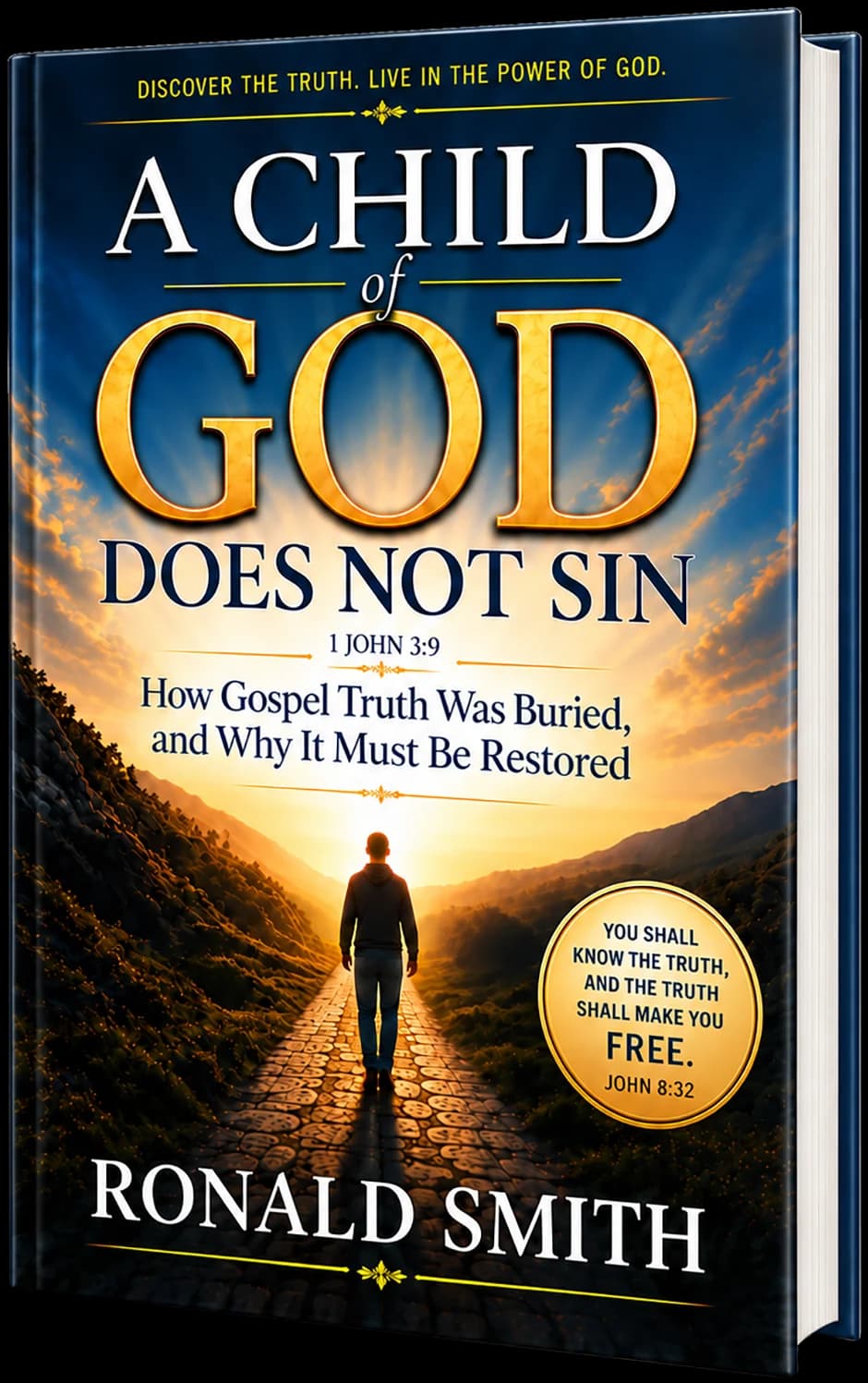
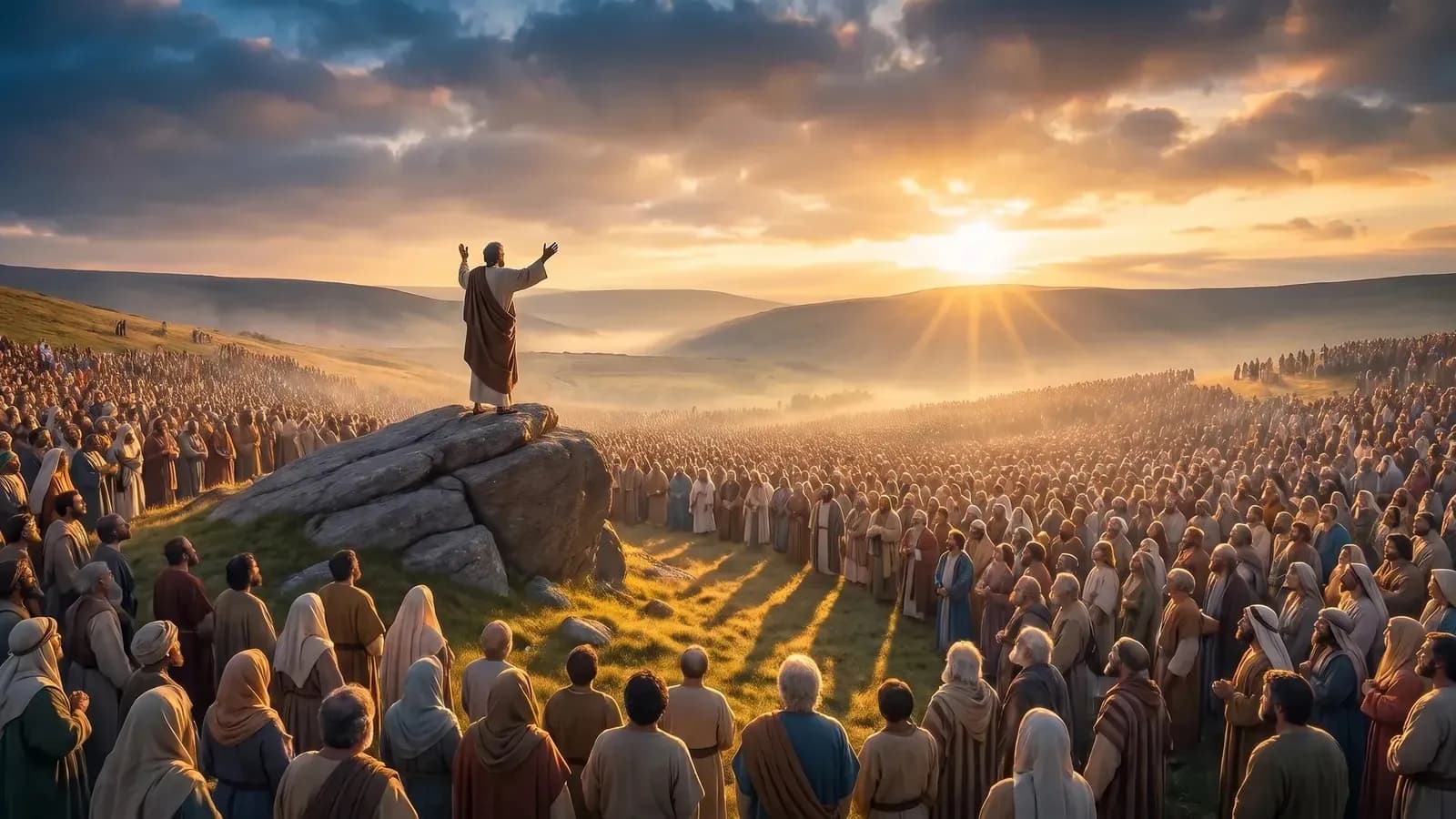
On the day of Pentecost, Peter preached a single sermon, and about three thousand people responded. Churches today would be thrilled with a tenth of that. In my book, A Child of God Does Not Sin, I spend a chapter on what changed before and after Pentecost, and this question sits at the center of it: why did so many people understand the gospel so quickly? I think the answer is that many in that crowd already understood the problem, and Peter then showed them the promise.
They knew the problem
Luke tells us who was listening: "Jews, devout men, from every nation under heaven" (Acts 2:5). These were people who had grown up under the law. They knew the standard, and they knew they had not met it.
Paul explains what the law was for: "by the law is the knowledge of sin" (Romans 3:20). It was "our tutor to bring us to Christ" (Galatians 3:24). Years later, Peter himself would call it a yoke "which neither our fathers nor we were able to bear" (Acts 15:10). A person who has tried for years to keep the law and failed is not hard to convince that he is guilty.
So when Peter finished, the crowd "were cut to the heart, and said... 'Men and brethren, what shall we do?'" (Acts 2:37). They didn't argue. They asked for help. The law had prepared them, and the Holy Spirit pressed it home through Peter's words, as Jesus said He would: "He will convict the world of sin" (John 16:8).
I should be fair here. Not everyone in Jerusalem that day was convicted. Some mocked (Acts 2:13). But many were, and that is the point. They arrived already knowing they needed a fix.
What the law could not do
The law exposed the problem, but it couldn't solve it. Paul says it plainly: "what the law could not do in that it was weak through the flesh" (Romans 8:3). The law could say what to do. It could not give anyone the power to do it.
That left a person in a hard place. He knew what God required, he saw himself falling short, and the only tool he had been given was the one that kept pointing out the failure.
What God had promised
Long before Pentecost, God had promised a different arrangement. Through Ezekiel He said, "I will put My Spirit within you and cause you to walk in My statutes, and you will keep My judgments and do them" (Ezekiel 36:27). Moses had said the same: "the Lord your God will circumcise your heart... to love the Lord your God with all your heart" (Deuteronomy 30:6). The promise was repeated in the new covenant: "I will put My laws in their mind and write them on their hearts" (Hebrews 8:10).
Notice what these promises say. God did not promise to lower the standard. He promised to do inside a person what the law could only demand from the outside.
What Peter actually preached
Peter did not soften the charge. He said, "God has made this Jesus, whom you crucified, both Lord and Christ" (Acts 2:36). Then, when they asked what to do, he gave an answer with two halves: "Repent, and let every one of you be baptized in the name of Jesus Christ for the remission of sins; and you shall receive the gift of the Holy Spirit" (Acts 2:38).
Remission of sins is the forgiveness. The gift of the Holy Spirit is the power. And Peter added, "the promise is to you and to your children, and to all who are afar off" (Acts 2:39). They didn't hear half a gospel. They heard the whole thing. Luke gives us a summary, since he says Peter "testified and exhorted" with "many other words" (Acts 2:40).
Paul says the same later: Christ redeemed us from the curse of the law "that we might receive the promise of the Spirit through faith" (Galatians 3:13-14). In Antioch he preached that through Jesus "is preached to you the forgiveness of sins; by Him everyone who believes is justified from all things from which you could not be justified by the law of Moses" (Acts 13:38-39).
Forgiveness and the power to live it
The second half is the one we skip. Paul says God sent His Son "that the righteous requirement of the law might be fulfilled in us who do not walk according to the flesh but according to the Spirit" (Romans 8:4). Zechariah said God delivers us "that we... might serve Him without fear, in holiness and righteousness before Him all the days of our life" (Luke 1:74-75).
That is why Paul can ask, "Do we then make void the law through faith?" and answer, "Certainly not! On the contrary, we establish the law" (Romans 3:31). The gospel doesn't lower the standard. It meets it, by giving the power the law never could.
What this means for us
Many churches today preach the first half very well: you are forgiven. We say very little about the second half: you are enabled. A crowd that already felt the weight of the law heard both and responded. A crowd that has only heard "you're covered" may never feel the need for the second half at all.
I want to be careful about what I'm claiming. The sin I mean is willful, knowing sin, not mistakes, ignorance, or ordinary human weakness. The gift of the Spirit that Peter promised is the same power Paul says lets the law's righteous requirement be fulfilled in us (Romans 8:4). And the promise reaches further than that Pentecost crowd. It is "to you and to your children, and to all who are afar off, as many as the Lord our God will call."
That includes us.
A Child of God Does Not Sin is now available on Amazon.
— end —