
I woke up at 3:30 this morning with one word sitting on my mind: servant. I'd heard it talked about online the day before, and it wouldn't let me go back to sleep. The more I turned it over, the more I realized the gap between what we picture when we hear "servant" and what Paul actually wrote is night and day. And worse — most of us aren't even living up to the weaker word we've substituted for it.
The word, and what it actually says
The Greek behind "servant" in most of Paul's letters is doulos. In the Roman world, a doulos wasn't an employee. He owned nothing — not his labor, not his time, not his own body. He couldn't quit, couldn't negotiate terms, couldn't walk away when the arrangement stopped suiting him. Everything about him belonged to someone else.
That's not what "servant" means to a modern English reader. A servant works for you. A servant can be let go, or can leave. A servant has a life underneath the job. None of that is true of a doulos. The English word implies a relationship you entered and could exit. The Greek word describes a person who no longer has an "exit" as a category that applies to him at all.
The claim Paul actually made about himself
Paul doesn't soften this when he talks about his own identity. "Paul, a doulos of Christ Jesus" is how he opens Romans, Philippians, and Titus — not "employee," not "volunteer," not "servant" in the sense of someone doing a job he could leave. A slave of Christ Jesus. That's the claim he leads with, before he says anything else about who he is.
And it isn't only Paul's claim about himself. Philippians 2:7 says Christ "emptied himself, by taking the form of a doulos." The God of the universe took the form of a slave. That's the actual shape of the incarnation Paul is describing — not condescension to servanthood, but total self-emptying into the lowest possible legal and social category a first-century reader could imagine.
A rare reversal — almost
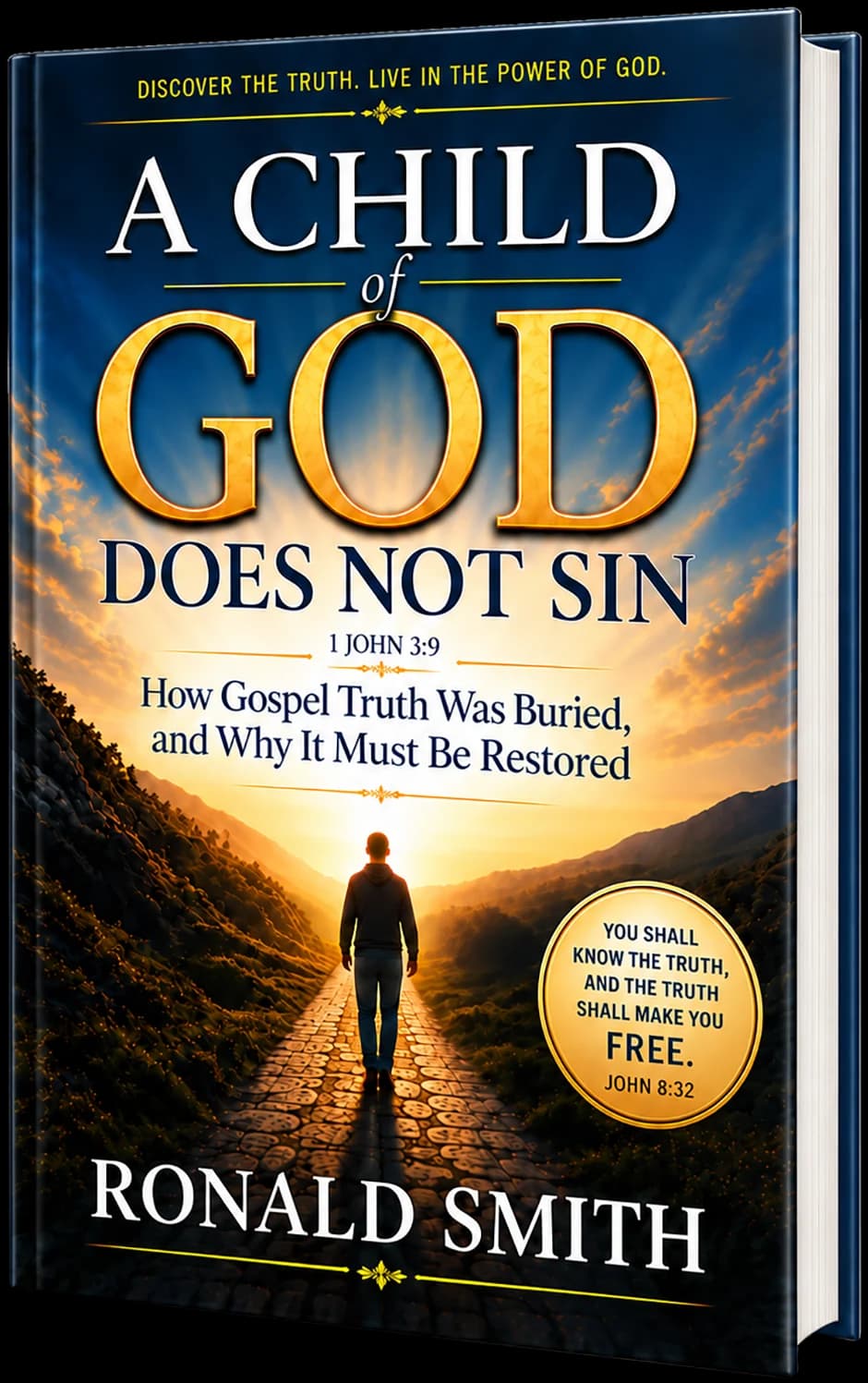
Bible translation almost always moves one direction: softer. That's the whole pattern my book — A Child of God Does Not Sin — is built on, and this series keeps documenting — words and verses that started out with real force getting quietly smoothed into something more comfortable over centuries of translation. The King James Version renders doulos as "servant" essentially everywhere, including in passages where the word plainly means something much harder, and most major translations since have followed that same softened path.
The ESV is a genuine, documented exception — and it's worth knowing the story, because it's rare enough to notice. In 2010, the ESV's translation committee met specifically to debate how to render doulos, in a session the BBC actually filmed. They voted 9 to 3 to move four instances in 1 Corinthians 7 from "slave" to "bondservant." And in Romans 6, they didn't soften it at all: "you were slaves of sin... now slaves of righteousness" (Romans 6:17-18), unflinching, all the way through the passage. That's a translation committee choosing the harder word on purpose, against the grain of every translation before it — a real, rare correction instead of another softening.
But even the ESV stopped short exactly where it would hit closest to home. Paul's own self-description — "a doulos of Christ Jesus" — is still rendered "servant" in the ESV, not "slave," not even "bondservant." Philippians 2:7, Christ's own self-emptying, is still "servant" too, with "slave" tucked into a footnote as the alternative reading. The correction happened in the passages about slavery as a social institution. It didn't happen in the passages about identity — Paul's, or Christ's own.
Most of us aren't even good servants
Here's the verse that actually stopped me at 3:30 in the morning. Jesus tells His disciples: "when you have done all those things which you are commanded, say, 'We are unprofitable servants. We have done what was our duty to do'" (Luke 17:10). The Greek there is douloi again. A servant who goes above and beyond expects credit for it. A slave who does everything commanded has earned no credit at all, because total obedience was never optional to begin with — it was already owed. That's the doulos standard: obedience isn't a finish line you get praised for reaching. It's just where you were always supposed to be standing.
Most of us don't live anywhere near that line. We don't want to be a slave to sin — nobody does, once it's named plainly (Chapter Eight of my book walks through exactly this, the "slave of sin" language in John 8:34 and 36, and what Jesus actually meant by it). But most of us don't want to be a doulos of Christ either, not really — not the total, no-exit version Paul described himself as. We want the English word instead of the Greek one: a servant relationship we can manage, negotiate, and step back from when it costs too much.
Why this is the whole book, really
My book is built on a single verse almost nobody takes at face value anymore, even though nothing about it is actually unclear: "Whoever has been born of God does not sin, for His seed remains in him; and he cannot sin, because he has been born of God" (1 John 3:9, NKJV). People rarely argue with the Greek. They just quietly can't believe it's describing them.
Part of the reason, I think, is this exact word. We picture ourselves as servants, not as douloi. A servant has off-hours — a life outside the job, a place to retreat to where the job's demands don't follow. Occasional sin fits neatly into that gap; it happens off the clock, in the part of life that was always yours to keep. A slave has no such gap. There's no off-hours self left to sin with, because there was never a part of a doulos's life that belonged to him in the first place.
That's not a burden tacked onto the verse — it's the actual mechanism behind it. When there's nowhere left to hide, no private self held back from Christ, you end up in a communion with Him close enough that 1 John 3:9 stops sounding like a lofty, unreachable ideal and starts sounding like simple description. Not an achievement to strain toward. Just where a doulos already stands.
To be clear, as I document throughout the book: "sin" here means willful, deliberate disobedience — not the everyday, involuntary failings that come with living in a fallen body. That distinction is the difference between a claim of moral perfection, which this isn't, and a claim about total, doulos-level surrender, which it is.
The bottom line is the one Paul already gave us: "having been set free from sin, you became slaves of righteousness" (Romans 6:18, NKJV). A child of God does not sin — not because he's pulled off some rare spiritual feat, but because he isn't a servant with off-hours to begin with. He's a slave to righteousness. There's nowhere left for sin to hide.
A Child of God Does Not Sin releases on Amazon October 1, 2026.